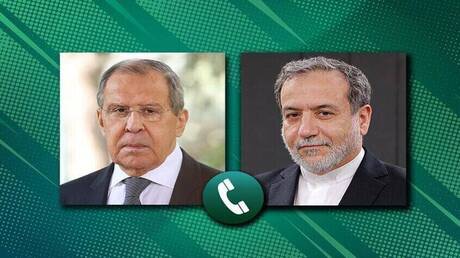
Russian Foreign Minister Sergey Lavrov and Iranian Foreign Minister Abbas Araghchi engaged in a phone conversation to explore the prospects of shifting the conflict resulting from US and Israeli aggression against Tehran towards a political and diplomatic resolution. These discussions occur amid escalating tensions in the region, which call for international efforts to find peaceful solutions.
The US and Israeli aggression against Iran has heightened tensions in the Middle East, raising fears of a military escalation that could have serious repercussions on regional and international security. Russia has repeatedly emphasized the necessity of dialogue and negotiation as a means to resolve conflicts, aligning with Iran's stance of protecting its sovereignty and security.
Details of the Event
During the call, Lavrov and Araghchi discussed a range of issues related to the aggression, including military and political dimensions. Lavrov pointed out the importance of joint efforts among major powers to ease tensions, while Araghchi stressed the need to respect Iran's sovereign rights.
The economic dimensions of the crisis were also addressed, as Iran suffers from stringent economic sanctions that impact daily life. Both sides expressed their desire to enhance economic and political cooperation to face common challenges.
Background & Context
Historically, relations between Iran and the United States have seen increasing tensions since the Islamic Revolution in 1979. These tensions escalated after the US withdrawal from the Iranian nuclear agreement in 2018, leading to heightened economic sanctions. On the other hand, Israel views Iran as a threat to its national security, prompting it to carry out military operations against Iranian targets in Syria and elsewhere.
In recent years, Russia has emerged as a key player in the region, seeking to enhance its influence by supporting Iran in the face of Western pressures. This cooperation between Moscow and Tehran reflects a shift in regional dynamics, as both countries aim to confront shared challenges.
Impact & Consequences
If a political settlement is reached, it could lead to a de-escalation of tensions in the region, contributing to the stabilization of security and economic conditions. The success of these negotiations may also encourage other countries to adopt a dialogue approach rather than military escalation.
However, challenges remain, as there are regional and international powers that may oppose any settlement that weakens their position. Therefore, any progress in this direction requires ongoing diplomatic efforts and international cooperation.
Regional Significance
The tensions between Iran and the United States directly impact security and stability in the Arab region. Conflicts in Syria, Iraq, and Yemen, for example, are significantly influenced by the tensions between Tehran and Washington. Thus, any political settlement could help alleviate these conflicts, benefiting Arab countries.
Moreover, the stability of Iran could contribute to enhancing regional security and reducing the chances of military escalation that might threaten neighboring countries. Therefore, the dialogue between Moscow and Tehran represents a positive step towards achieving peace in the region.
In conclusion, the prospects for a political settlement remain open, but they require strong political will from all involved parties. The continuation of dialogue between Russia and Iran may signify a new beginning towards achieving stability in a region plagued by ongoing conflicts.