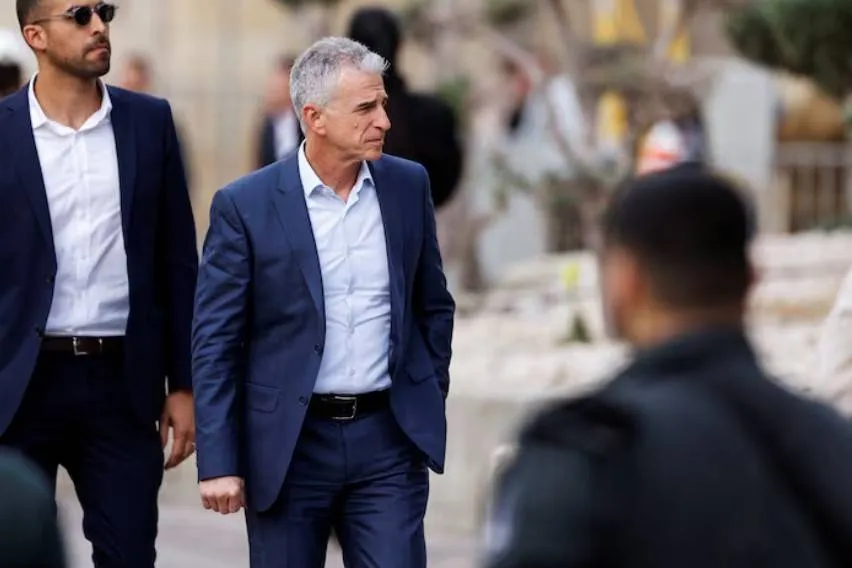
Israeli intelligence chief (Mossad) David Barnea revealed that operations carried out by the agency this year, which received commendations from the Chief of Staff, have contributed to breaching the Lebanese and Iranian borders. This was stated during a ceremony held at the Mossad headquarters to distribute awards for the year 2025.
Barnea noted that the Mossad has obtained strategic and tactical intelligence from the core secrets of the enemy, reflecting new and pioneering operational capabilities in the targeted countries. He reaffirmed the Mossad's commitment to constant vigilance, emphasizing that they will not settle for their current achievements and will act with full force upon detecting any threat.
Event Details
Barnea's statements come at a sensitive time as the United States is reviewing new Iranian proposals regarding the reopening of the Strait of Hormuz, amid an ongoing war that is putting pressure on the global economy. Reports indicate that disagreements between the United States and Iran continue to hinder the achievement of a comprehensive settlement.
The White House announced that Washington is reviewing an offer presented by Tehran through intermediaries, which includes reopening the strait and postponing discussions about the nuclear file. An American official confirmed that President Donald Trump is dissatisfied with the Iranian proposal, indicating that Washington insists on addressing nuclear issues from the outset.
Background & Context
The Strait of Hormuz, through which one-fifth of the world's oil and liquefied gas production passes, is currently under a dual Iranian and American blockade. Despite a ceasefire being in effect for about three weeks, mediations and negotiations have failed to reach a definitive end to the war.
In this context, U.S. Secretary of State Marco Rubio pointed out that any agreement must prevent Iran from acquiring nuclear weapons, considering that the Iranian offer is better than expected. Iranian Foreign Minister Abbas Araghchi has conducted an intensive diplomatic tour, including a visit to Russia, where he met with President Vladimir Putin.
Impact & Consequences
Concerns are rising over escalating tensions in the region, as an Israeli soldier was seriously injured due to the crash of a drone during operational activities in southern Lebanon. This incident indicates the evolving capabilities of Hezbollah in utilizing drones, complicating the security situation in the area.
Reports suggest that Hezbollah has developed its capabilities in the field of drones, using new technologies imported from the battlefield in Ukraine. These developments pose a significant challenge to the Israeli army, which is seeking effective solutions to intercept these drones.
Regional Significance
Arab countries are directly affected by these developments, as any escalation in tensions between Iran and the United States could impact the stability of the entire region. The ongoing conflict in Lebanon reflects the security challenges faced by neighboring countries.
In conclusion, the situation in the region remains volatile, with ongoing tensions between major powers, necessitating close monitoring by Arab countries to ensure their stability and security.