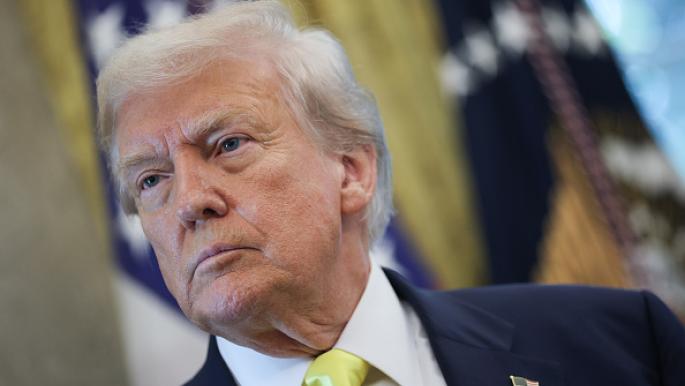
A recent report by Time magazine has unveiled details of a meeting held at the White House, indicating that President Donald Trump is facing mounting pressure from within the Republican Party to end the ongoing conflict with Iran. With escalating tensions in the region, it seems that time is running out for Trump, prompting him to seek a way out that preserves his reputation.
This meeting comes at a critical juncture, as fears of military escalation in the Middle East are growing, which could have dire consequences for both regional and international security. Reports suggest that prominent members of the Republican Party have begun expressing concern over the continuation of the conflict, which could impact Trump's chances in the upcoming elections.
Details of the Meeting
According to Time, the meeting at the White House brought together several senior advisors and military officials. During the meeting, options for ending the conflict with Iran were discussed, including the possibility of negotiating a new agreement or taking diplomatic steps to ease tensions. Some officials pointed out that continuing this conflict could harm the interests of the United States in the region.
Sources confirmed that Trump feels pressure from his electoral base, which has started to favor ending foreign wars and focusing on domestic issues. This trend aligns with the campaign slogans that Trump previously launched, which called for "America First."
Background & Context
Since taking office, Trump has overseen increasing tensions in U.S.-Iranian relations, particularly following the United States' withdrawal from the Iranian nuclear deal in 2018. This withdrawal led to the reimposition of harsh sanctions on Iran, exacerbating tensions in the region. In recent years, confrontations between U.S. and Iranian forces have escalated, raising fears of a full-scale conflict.
Historically, the United States and Iran have been in a state of ongoing tension since the Iranian revolution in 1979. However, the current circumstances differ, as internal pressures on Trump to take concrete steps towards ending the conflict have increased, especially with the upcoming U.S. presidential elections.
Impact & Consequences
The continuation of the conflict with Iran could lead to serious repercussions for regional security, including heightened tensions with U.S. allies in the region. Additionally, any military escalation could impact global oil markets, potentially leading to rising prices and affecting the global economy.
Moreover, Trump's failure to end the conflict could negatively impact his chances in the upcoming elections, as voters may gravitate towards candidates who promise to end foreign wars and improve the domestic economic situation.
Regional Significance
Neighboring Arab countries such as Iraq and Saudi Arabia are among the most affected by the U.S.-Iran conflict. Any escalation in tensions could destabilize these countries, which may adversely affect regional security.
The situation in Iraq, which suffers from the effects of the conflict, could worsen if diplomatic steps are not taken to ease tensions. At the same time, any improvement in relations between the United States and Iran could open the door for new opportunities for cooperation on other regional issues.
In conclusion, Trump appears to be in a precarious position as he seeks to end the conflict with Iran amid increasing pressures from his party. Taking diplomatic steps may be the only solution to maintain regional stability and improve his chances in the upcoming elections.