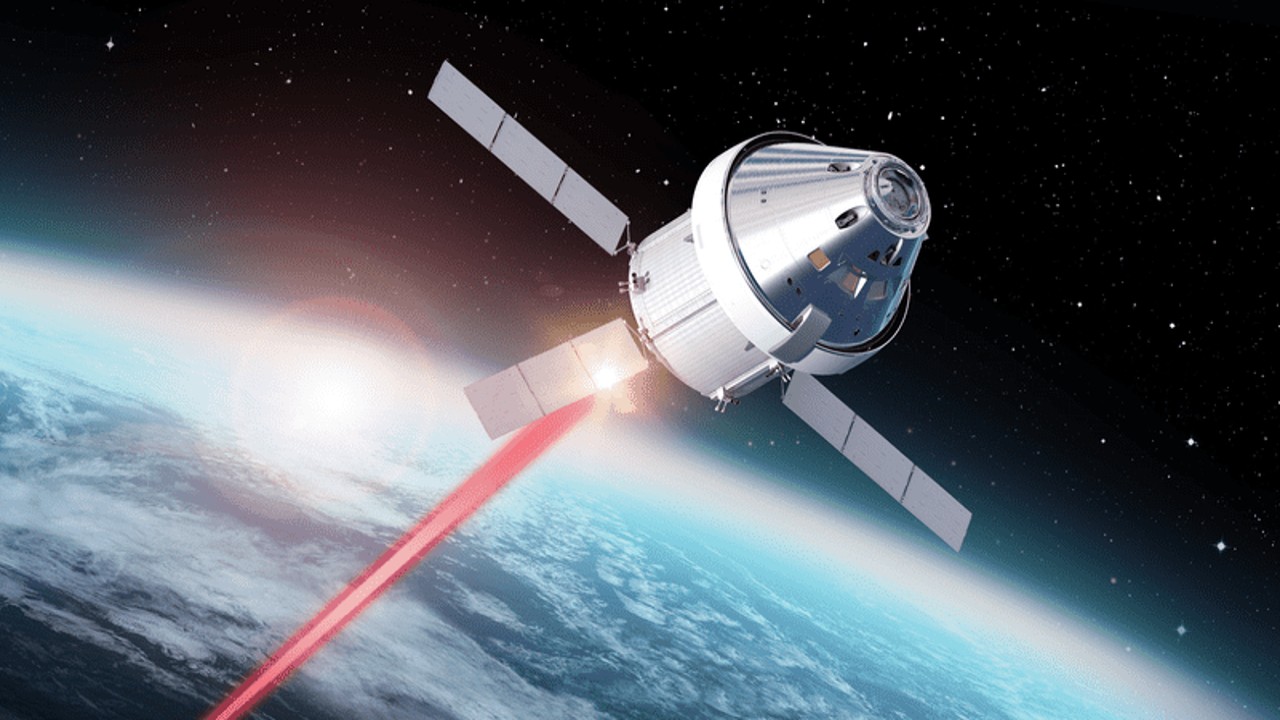
NASA has announced the use of advanced laser technology in its upcoming Artemis II mission, which aims to return humans to the Moon. This new technology will enable data transmission in 4K quality, representing a significant leap in the field of space communications.
This step is part of NASA's efforts to enhance communication capabilities between spacecraft and Earth, utilizing lasers to transmit data faster and more efficiently than traditional technologies. This technology is expected to improve the quality of images and videos sent from space, enhancing the viewing experience for audiences on Earth.
Details of the Mission
The Artemis II mission is part of the Artemis program, which aims to return humans to the Moon by 2024. The Orion spacecraft, which will launch in this mission, will use laser technology to transmit data back to Earth, allowing scientists and engineers to receive accurate real-time information.
This new technology involves using laser beams to transmit data instead of traditional radio waves, increasing the speed of information transfer and reducing interference. This shift in technology could change the way we communicate with spacecraft in the future.
Background & Context
Historically, space communications have relied heavily on radio waves, which have faced limitations in speed and quality. As technology has advanced, space agencies have sought more effective alternatives. In recent years, laser technologies have been developed as a means of data transmission, creating new opportunities for space exploration.
The Artemis II mission is part of a larger vision for NASA, which aims to establish a permanent human presence on the Moon, paving the way for future exploration of Mars. The use of laser technology in this mission is a significant step toward achieving this goal.
Impact & Consequences
Laser technology in space communications represents a true revolution, allowing for the transmission of vast amounts of data in a short time. This will enable scientists to conduct more complex and precise research, enhancing our understanding of the universe.
Moreover, this technology could impact other fields such as terrestrial communications, where companies might benefit from these innovations to improve their services. The success of this mission could also encourage further investments in the space sector, enhancing competitiveness in this field.
Regional Significance
Given the increasing importance of space exploration, Arab countries could benefit from these technological advancements. Many Arab nations have begun investing in space programs, such as the United Arab Emirates, which launched the Hope Probe to Mars.
Laser technology could open new avenues for collaboration among Arab countries in the field of space, enhancing their scientific and technological capabilities. Additionally, improving space communications could contribute to the development of educational and research programs in the region.
In conclusion, the use of laser technology in the Artemis II mission represents an important step toward a bright future for space exploration. This new technology not only enhances communication capabilities but also opens new horizons for scientific research and international collaboration.