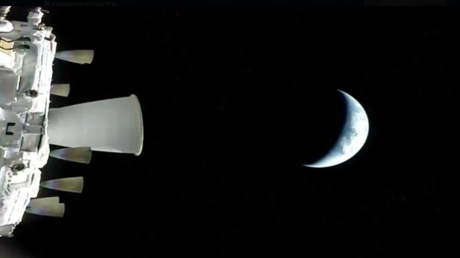
NASA has published the first image of Earth, documented by the Orion spacecraft as it embarks on a mission to the Moon's orbit. This image is not just an ordinary snapshot; it reflects the technological advancements and scientific research that the agency is achieving in the field of space exploration.
This image comes at a crucial time as NASA prepares to launch new missions aimed at returning to the Moon, which is part of the Artemis program that seeks to send astronauts to the lunar surface by 2024. The image showcases Earth as a beautiful blue sphere, highlighting the beauty of our planet from space.
Details of the Event
The image was captured by the Orion spacecraft, which was launched on a test mission aimed at evaluating the vehicle's systems before sending astronauts. This mission is considered a significant step towards achieving NASA's ambitious goals in exploring the Moon and Mars. The image shows Earth from a distant perspective, allowing scientists and researchers the opportunity to study the planet from a new viewpoint.
This image is part of a series of photos that NASA will release throughout the mission period, enabling the public to follow the mission's progress and the developments occurring in space.
Background & Context
Historically, space missions have posed significant challenges for scientists and engineers. Since the launch of the Apollo program in the 1960s, humanity has achieved remarkable milestones in space exploration. However, returning to the Moon represents a new step towards deeper space exploration, including Mars.
The Artemis program is part of a larger vision for NASA, aiming to establish a permanent base on the Moon, which will enable scientists to conduct advanced research on space and the lunar environment.
Impact & Consequences
This image serves as evidence of the technological progress humanity has made in the field of space. It also reflects the importance of international cooperation in space exploration, as many countries are participating in joint projects aimed at achieving common scientific goals.
The success of this mission could encourage further investments in the space sector, leading to the development of new technologies that may benefit humanity in various fields, including communications and navigation.
Regional Significance
These achievements in space exploration serve as an inspiration for Arab countries seeking to develop their space programs. Many Arab nations have already begun investing more resources in scientific research and technology, reflecting their desire to participate in this advanced field.
Moreover, these accomplishments may open new avenues for cooperation between Arab countries and global space agencies, enhancing the region's standing in the fields of science and technology.
In conclusion, the release of this image reflects the ongoing progress in space exploration and reinforces hope for achieving further scientific accomplishments in the future.