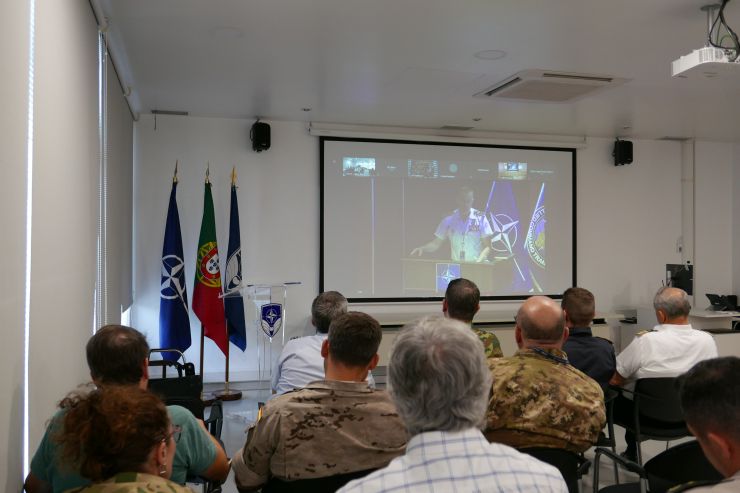
Admiral Pierre Vandier, the Supreme Allied Commander Transformation of NATO, emphasized that the alliance is facing new challenges in a world filled with shocks, rather than traditional crises. These remarks come at a sensitive time as criticism from U.S. President Donald Trump towards the alliance intensifies, coinciding with rising tensions in the Middle East, especially with the ongoing war in Iran.
Vandier's statements are part of NATO's efforts to enhance its capabilities and readiness to address increasing security challenges. He pointed out that the alliance must adapt to changing circumstances and be prepared to confront any threats that may arise in the future.
Event Details
During his address, Admiral Vandier clarified that NATO is not merely in a state of crisis but in a state of shock that requires a swift and effective response. He noted that the current geopolitical tensions, including the conflict in Iran, pose a significant challenge to the alliance, necessitating a reassessment of its strategies and priorities.
Vandier also confirmed that NATO is working to strengthen cooperation among member states, highlighting the urgent need to develop new strategies to tackle increasing threats, whether traditional or non-traditional.
Background & Context
NATO was established in 1949 as a military alliance aimed at enhancing the collective security of member states against Soviet threats. Over time, the alliance's role has evolved to include addressing non-traditional threats such as terrorism and cyberattacks.
In recent years, NATO has faced increasing criticism from various leaders, including Trump, who has called for higher defense spending by member states. This criticism comes at a time when the world is witnessing radical shifts in power dynamics, complicating the security landscape.
Impact & Consequences
Vandier's remarks signal that NATO is aware of the new challenges it faces and is striving to develop effective strategies to address them. These changes may influence how the alliance deals with future crises and could lead to enhanced cooperation among member states.
Furthermore, tensions in the Middle East, particularly the conflict in Iran, may impact regional stability, prompting NATO to take proactive steps to ensure regional security.
Regional Significance
The developments within NATO and its new directions are a source of concern for many Arab countries, especially amid increasing tensions in the Middle East. Any escalation in the Iranian conflict could have direct repercussions on regional security, necessitating Arab states to bolster their defense capabilities and collaborate with NATO.
In conclusion, NATO appears to be at a transformative stage, seeking to adapt to a world filled with new challenges. These changes could significantly affect both regional and international security, requiring all stakeholders to work together to ensure stability and peace.