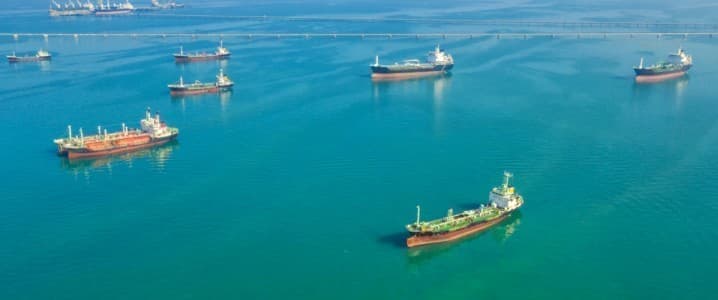
Amitah Sen, founder and director of market information at Energy Aspects, stated that the Strait of Hormuz remains unsafe for oil flow. This comes in light of the US and Iran announcing a two-week ceasefire, raising questions about the future of the global oil market.
This ceasefire is considered an important step amid ongoing tensions between the two countries; however, Sen points out that the situation in the strait remains unstable. She confirmed that tanker flows in the region do not reflect true stability, which could lead to further destruction of oil demand in global markets.
Details of the Event
The Strait of Hormuz is one of the world's most critical waterways, through which a significant percentage of global oil exports pass. With rising tensions between the US and Iran, the region has experienced substantial fluctuations in oil flows. Recent reports indicate that the ceasefire may help alleviate some pressures, but it will not resolve all outstanding issues.
In this context, Sen emphasized that oil demand could face further destruction due to global economic factors, including a slowdown in economic growth and increased production from other countries. Consequently, markets may face additional challenges in the upcoming period.
Background & Context
Historically, the Strait of Hormuz is a geographically and politically sensitive area. The region has witnessed numerous crises and conflicts that have impacted global oil prices. In recent years, tensions between the US and Iran have escalated, leading to repeated threats to close the strait, which could result in a significant spike in oil prices.
This ceasefire comes at a critical time as the world seeks to recover from the effects of the COVID-19 pandemic, which has led to a substantial decline in oil demand. However, geopolitical tensions continue to pose a significant threat to market stability.
Impact & Consequences
These developments are expected to affect oil prices in global markets. If tensions persist, we may witness a rise in prices due to uncertainty. Conversely, if the ceasefire succeeds in achieving stability, it could restore some confidence in the market.
Moreover, the impact of these events extends to oil-producing countries in the region, where their economies heavily rely on oil revenues. Any price fluctuations could negatively affect those economies, prompting them to take precautionary measures.
Regional Significance
Arab oil-producing countries, such as Saudi Arabia and the UAE, are among the most affected by developments in the Strait of Hormuz. Rising oil prices could benefit these countries, while any deterioration in conditions could adversely affect their economies.
Additionally, stability in the region is vital for regional security, as any escalation could have widespread repercussions affecting all Arab nations. Therefore, closely monitoring events in the Strait of Hormuz remains essential.