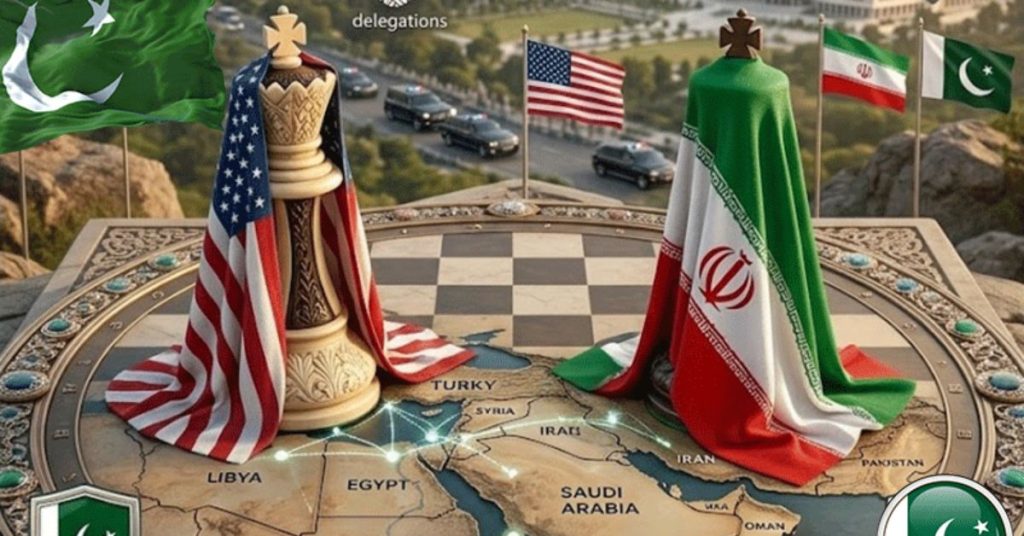
All eyes are on Islamabad where negotiations between the United States and Iran are taking place, coinciding with the presence of Iranian Foreign Minister Abbas Araghchi. This is the second round of talks, sponsored by the Prime Minister and his Deputy, the Foreign Minister, which has raised significant hopes for a resolution to the ongoing conflict affecting the world.
However, the Iranian authorities' decision not to engage in direct talks with the American side raises concerns about the potential failure of these negotiations. The conflicting positions of Iranian leaders reflect a state of division within the leadership, as confirmed by former U.S. President Donald Trump.
Details of the Event
While some Iranian leaders, such as President Masoud Pezeshkian, Parliament Speaker Qalibaf, and Foreign Minister Araghchi, discuss the importance of negotiation and extending the truce, leaders of the Revolutionary Guard, who represent the ruling power, seem to prefer the continuation of conflict. This gap in positions reflects a state of instability in Iranian decision-making.
There remains ambiguity surrounding the position of Iranian Supreme Leader Mohammad Khamenei, particularly regarding his ability to make decisive decisions that represent the state. If he is indeed capable, Iran may face significant challenges in confronting the military power of the United States, which is surrounding it in the region, including aircraft carriers and warships.
Background & Context
Historically, Iran has viewed itself as an unbreakable regional power, but the current reality indicates a significant decline in its military and economic capabilities. Tehran has lost much of its air and naval strength, rendering it unable to confront the challenges posed by major powers.
Many questions arise regarding Iran's interest in escalating tensions with countries around the world, especially in light of its loss of capabilities. Why does it continue to target oil and gas supplies in the Gulf, despite many countries adopting neutral positions regarding the conflict?
Impact & Consequences
Recent events confirm that Iran may be in a difficult position as it continues to face the repercussions of American sanctions. These sanctions have significantly impacted the Iranian economy, increasing pressure on the government to negotiate seriously.
If Iran persists in its stubbornness, it could exacerbate the situation in the region and intensify existing conflicts. Additionally, the failure to reach an agreement could negatively affect regional and international stability.
Regional Significance
The developments in Islamabad are of great importance to the Arab region, as any escalation in the Iranian-American conflict could impact security and stability in Gulf countries. Arab nations are closely monitoring these negotiations, as any escalation could lead to negative repercussions on energy supplies and global markets.
In conclusion, the most pressing question remains: what is Iran's interest in antagonizing all countries while it suffers from a significant decline in its capabilities? These questions remain unanswered, complicating the regional landscape further.