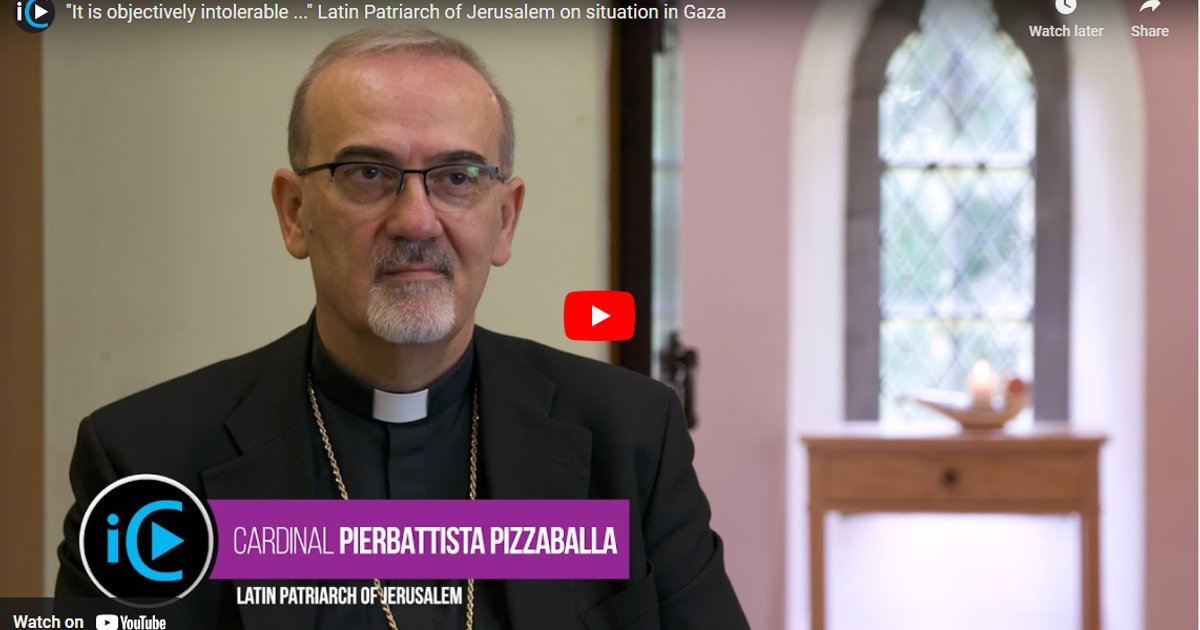
Israeli Prime Minister Benjamin Netanyahu announced that the Latin Patriarch of Jerusalem, Cardinal Pierbattista Pizzaballa, will receive "full and immediate access" to the Holy Sepulchre after police prevented him from celebrating the Palm Sunday mass at the sacred site. Netanyahu explained that this decision was made due to concerns regarding the cardinal's safety amid rising tensions in the region.
Earlier, Cardinal Pizzaballa and clergyman Francisco Ilbu were barred from entering the church, which is considered one of the holiest Christian sites, believed to be the location of Christ's crucifixion. This incident has been viewed as a serious precedent, as it has been centuries since a Latin Patriarch was denied entry to the church on Palm Sunday.
Details of the Incident
Reports indicate that Cardinal Pizzaballa was planning to hold a special mass to mark the beginning of Holy Week, but Israeli police stopped them at the church entrance. The Latin Patriarchate issued a statement confirming that this decision represents a "serious precedent" that disregards the feelings of billions of people worldwide who look to Jerusalem during this time.
The Patriarchate also criticized the decision, stating that it represents a "radical deviation from the fundamental principles of logic and freedom of worship." They emphasized that they had adhered to all restrictions imposed since the beginning of the war, and that the recent decision was "unreasonable" and "disproportionate."
Background & Context
These events occur amid escalating tensions in Jerusalem, where the city has recently witnessed an uptick in rocket attacks from Iran, raising concerns about the safety of holy sites. Netanyahu pointed out that the holy sites for Christians, Jews, and Muslims have faced increasing threats, including rocket shrapnel falling near the Holy Sepulchre.
Historically, Jerusalem has been a center for religious and political conflicts, where cultural and religious identities intersect. The city has witnessed numerous historical events that have shaped its course, making any decision regarding holy sites particularly significant.
Impact & Consequences
The barring of the cardinal from entering the Holy Sepulchre could exacerbate tensions between different religions in Jerusalem and may provoke negative reactions from Christian communities worldwide. Many Western leaders condemned this decision, with the U.S. ambassador to Israel describing it as an "unfortunate overreach."
Italian Prime Minister Giorgia Meloni noted that this decision is an "insult not only to believers but to every community that recognizes freedom of religion." French President Emmanuel Macron called for ensuring the freedom to conduct religious rituals for all faiths in Jerusalem.
Regional Significance
These events serve as a reminder of the challenges faced by Christian communities in the Middle East, where they suffer from political and social pressures. Freedom of worship in Jerusalem represents a sensitive issue, where political and religious interests intertwine, affecting stability across the entire region.
In conclusion, Netanyahu's decision to allow the Latin Patriarch access to the Holy Sepulchre is a positive step, but the greater challenge remains how to ensure freedom of worship for all religions under the current circumstances.