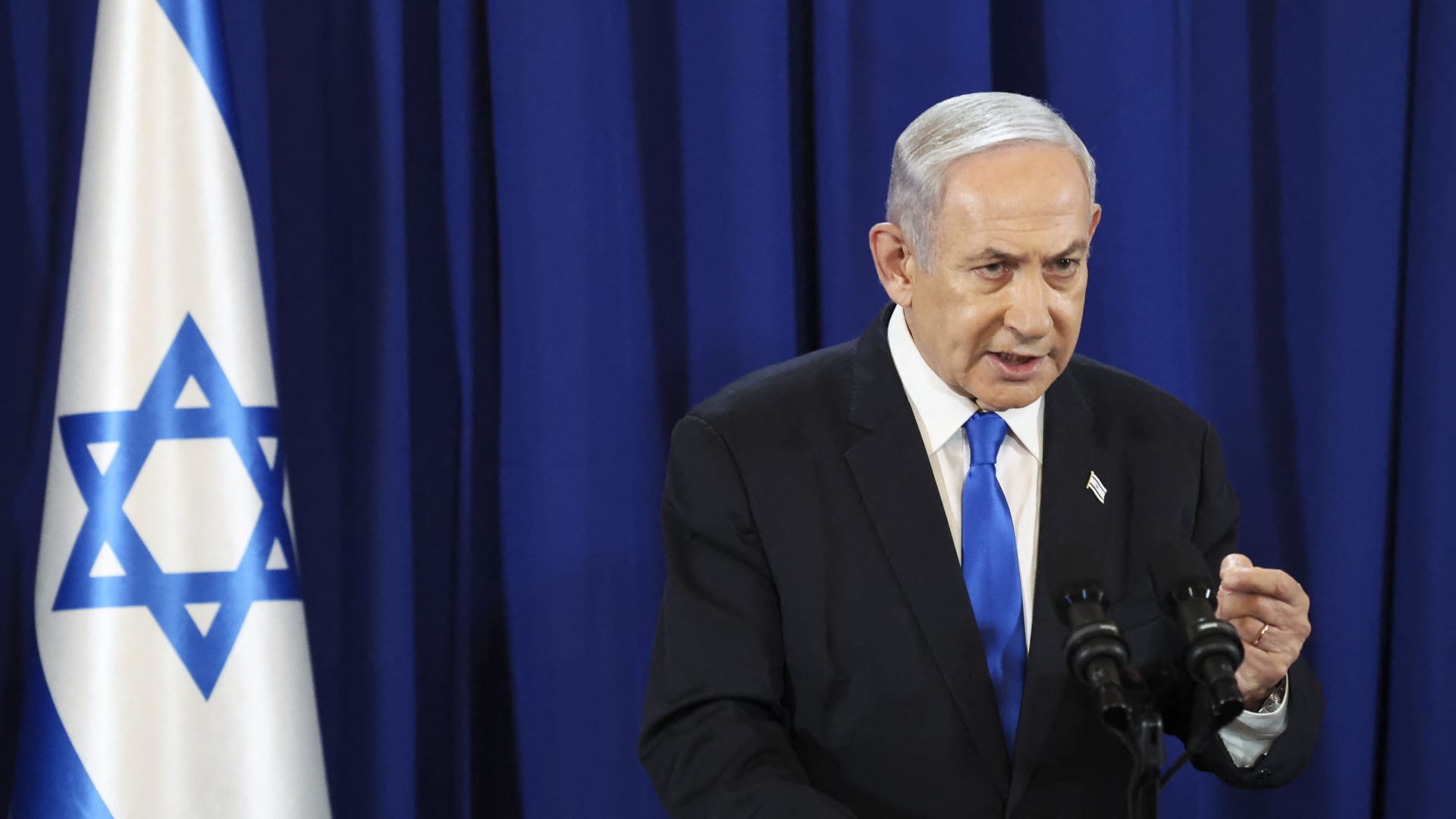
Israeli Prime Minister Benjamin Netanyahu has urged international leaders to join what he described as a 'struggle for existence' that Israel is facing against Iran. This escalation comes as he emphasized his country's readiness to personally target Iranian Revolutionary Guard leaders and their economic sites, reflecting Tel Aviv's increasing concerns over Iranian threats.
During his visit to a site of a missile incident in the city of Arad, Netanyahu stated that 'the time has come for others to intervene,' asserting that some countries have already begun to move in this direction. Netanyahu vowed to target the Iranian regime, saying, 'We will target them personally, we will work to strike their leaders and economic facilities, and we hope to create the conditions that lead to their downfall in Tehran.'
These comments come amid a significant military escalation in the region, where both the cities of Arad and Dimona, which houses an Israeli nuclear facility, have endured several missile attacks, resulting in over 100 injuries, according to Israeli emergency services. In justifying these strikes, Netanyahu confirmed that sirens sounded 10 minutes before the missiles fell, attributing delays in citizens reaching shelters to their slow response.
For his part, Finance Minister Bezalel Smotrich warned that Iranian missiles have become a significant threat to Europe, noting that their range exceeds 4,000 kilometers, which poses a persistent danger to many countries on the continent. Smotrich expressed Tel Aviv's confidence in its ability to neutralize this threat, emphasizing the importance of coordination with the previous U.S. administration under Donald Trump as a supporting factor in the idea of eliminating the Iranian threat.
In his statements, Israeli Foreign Minister Gidon Sa'ar stated that so far, the war has not spiraled out of control. Sa'ar affirmed, 'Israel is achieving its military successes day by day,' indicating that Iran is deliberately targeting civilians to increase casualties.
These events occur at a sensitive time, reflecting a significant shift in the trajectory of the conflict between Tel Aviv and Tehran, which has entered a new phase of direct confrontation following coordinated attacks from the United States and Israel on Iran earlier this year. The attack on the cities of Arad and Dimona is a reaction to the Iranian assault on the Natanz nuclear facility, signifying an escalation of military tensions in the region.
Israeli actions also come amid growing Arab and international concerns regarding Iranian nuclear activity, as the Iranian nuclear issue complicates diplomatic efforts and increases the likelihood of direct conflicts between nations.
Furthermore, Netanyahu's threats to topple the Iranian regime raise questions about the potential for reshaping alliances in the region, especially given the political divisions accompanying many Arab countries in dealing with Iranian regime issues. Considering the tense regional situation, Iran's experimental advancements with sophisticated missiles represent a key factor driving Tel Aviv to adopt more surgical military options.
All these events occur at a time when Arab nations strive to achieve balance against the Iranian threat, which may renew the discussion about the significance of any potential military alliances between Arab countries and Israel, and the ability of these alliances to meet new challenges on the regional stage.