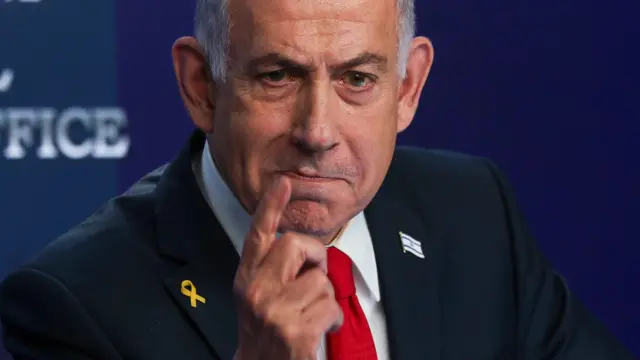
Concerns are growing that Israeli policies under Prime Minister Benjamin Netanyahu may hinder efforts to reach a peace agreement between the United States and Iran. Amid escalating tensions in the region, the significance of this issue is becoming more pronounced in British media, where its impact on international relations is being discussed.
Reports indicate that there has been notable progress in negotiations between the United States and Iran, but Netanyahu's interventions could obstruct this progress. Recently, Netanyahu announced his opposition to any agreement that might ease sanctions imposed on Iran, arguing that such actions would increase threats to Israeli national security.
Details of the Event
The current negotiations between the United States and Iran encompass multiple issues, including the Iranian nuclear program and Tehran's support for armed groups in the region. While Washington seeks to revive the nuclear agreement signed in 2015, Netanyahu expresses concern that any concessions made by the United States would bolster Iran's power in the region.
In this context, analysts have pointed out that Netanyahu aims to exploit these negotiations to strengthen his domestic political position, as he faces significant challenges from the opposition. Many Israeli officials have emphasized that any agreement must include strong guarantees to prevent Iran from obtaining nuclear weapons.
Background & Context
The roots of tensions between Iran and Israel date back decades, with Israel viewing Iran as an existential threat. These tensions have significantly increased following the United States' withdrawal from the nuclear agreement in 2018, leading to an escalation of hostilities between the two sides.
Iran seeks to enhance its influence in the region by supporting militias in Iraq, Syria, and Lebanon, which raises concerns for Israel. At the same time, the United States is attempting to rebuild its relationships with allies in the region, making the current negotiations strategically significant.
Impact & Consequences
If Israeli policies continue to obstruct negotiations, this could lead to an escalation of tensions in the region. Iran may take escalatory steps, such as increasing uranium enrichment or expanding its influence in Iraq and Syria, which could threaten regional security.
Moreover, the failure of negotiations could have dire consequences for the Iranian economy, which is already suffering from sanctions. Conversely, Israel may find itself in a weak position if it fails to convince the United States to adopt a more hardline stance towards Iran.
Regional Significance
Arab countries are directly affected by the tensions between Iran and Israel. The increase in Iran's influence in the region could destabilize countries like Iraq, Syria, and Lebanon, negatively impacting Arab security.
At the same time, some Arab nations are seeking to strengthen their relations with Iran, creating new balances in the region. Therefore, any agreement between the United States and Iran would have profound implications for regional policies.
In conclusion, peace efforts between the United States and Iran remain fraught with challenges, especially with Netanyahu's ongoing interventions. Reaching an agreement could be a step towards greater stability in the region, but it requires a delicate balance of various interests.