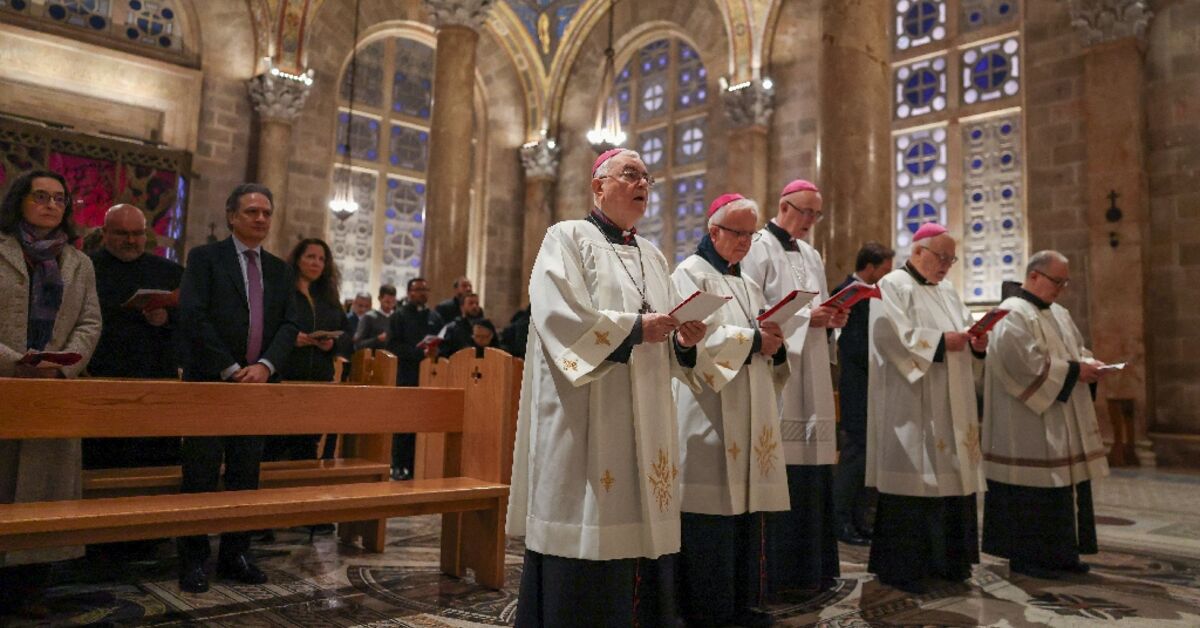
In a surprising move, Israeli Prime Minister Benjamin Netanyahu announced on Monday that Latin Patriarch Pierbattista Pizzaballa will be granted full and immediate access to the Holy Sepulchre in Jerusalem. This decision comes after Israeli police barred the patriarch from entering the church during the Palm Sunday celebrations, which sparked widespread outrage within Christian communities.
Netanyahu wrote on his account on the platform X (formerly Twitter) that he had instructed the relevant authorities to ensure the patriarch's full access to the church, reflecting the significance of this step in enhancing relations between the Israeli government and the church.
Details of the Event
The Holy Sepulchre, considered one of the holiest Christian sites, has witnessed increasing tensions in recent years, especially during major religious occasions. During Palm Sunday, celebrated by Christians worldwide, the patriarch was prevented from entering the church, provoking angry reactions from both local and international Christian communities.
The Holy Sepulchre is an important spiritual center, believed to be the site where Christ was buried and resurrected. This church has been at the center of many disputes among various Christian denominations, complicating the situation in the holy city.
Background & Context
Historically, Jerusalem has been a focal point for religious and political conflicts, housing sacred sites for multiple faiths. Since the Israeli occupation of East Jerusalem in 1967, the city has experienced escalating tensions between Palestinians and Israelis, particularly regarding access to holy sites.
The church, which is followed by several Christian denominations, symbolizes Christian unity, yet it simultaneously reflects the political and religious divisions in the region. Recent events may represent a part of the broader conflict between Israelis and Palestinians, with each side seeking to strengthen its position in the holy city.
Impact & Consequences
This decision could have positive effects on relations between the Israeli government and the church, potentially helping to ease tensions. However, the question remains whether this step is sufficient to address the deeper issues related to access to holy sites.
Moreover, this decision may contribute to improving Israel's image within international Christian circles, especially amid increasing criticism regarding Israeli policies towards Palestinians. Nevertheless, tensions persist and could flare up at any moment.
Regional Significance
This event represents a part of the larger picture of the conflict in the Middle East, where religious issues intertwine with political ones. For Arabs, access to holy sites is a fundamental right, and this event reflects the ongoing challenges faced by Christian communities in the region.
Additionally, these events may impact relations between Arab states and Israel, as many Arab countries seek to advocate for Palestinian rights in the holy city. Ultimately, hope remains for achieving peace and stability in the region, but the road ahead is still long.