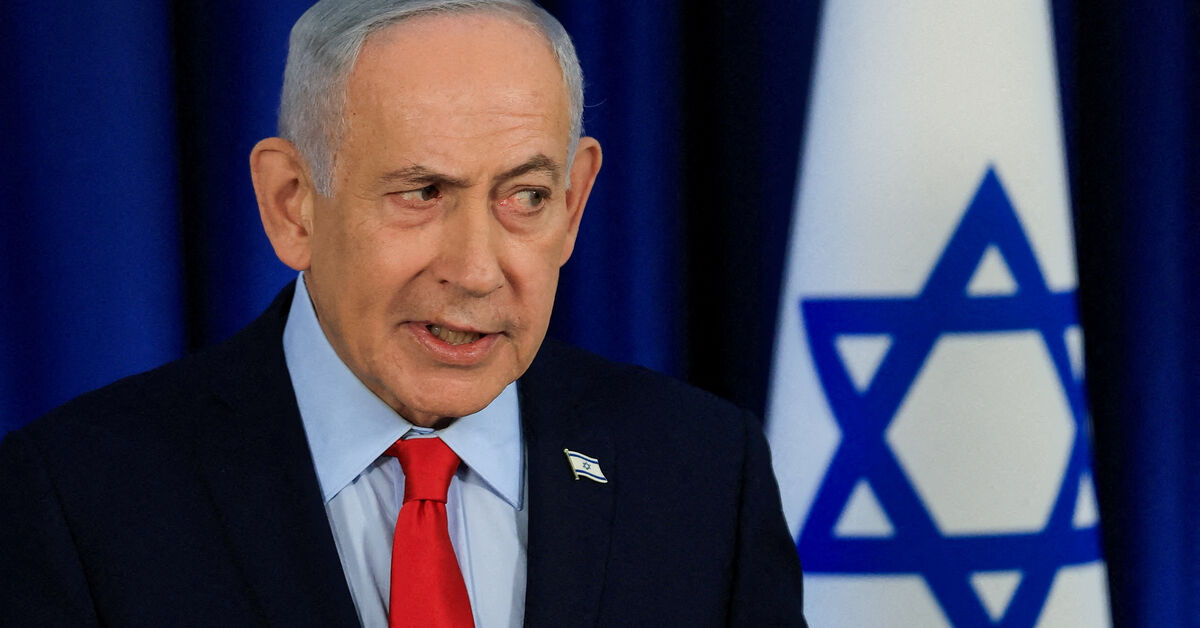
Israeli Prime Minister Benjamin Netanyahu announced on Thursday that he has issued instructions to the Israeli army to expand its control over the Gaza Strip, aiming to seize 70% of Palestinian lands. This decision comes at a time when residents of Gaza are suffering from harsh humanitarian conditions, as most are concentrated in a narrow strip along the coast.
Israel already controls approximately 64% of this coastal strip, which has suffered significant destruction due to ongoing Israeli military attacks for the past two years, following the assault launched by Hamas on southern Israel in 2023.
Details of the Announcement
In his statements, Netanyahu emphasized that the goal of this expansion is to enhance Israeli security, noting that military operations will continue until the specified objectives are achieved. This announcement has elicited mixed reactions in political and international circles, with some viewing it as a dangerous escalation in the Israeli-Palestinian conflict.
This move comes at a sensitive time, as residents of Gaza are under immense pressure due to the ongoing blockade and military operations, exacerbating their humanitarian suffering and impacting their daily lives. Furthermore, this military expansion could worsen security conditions in the region.
Background & Context
Historically, the Gaza Strip has witnessed repeated conflicts between Israel and Palestinian factions, with Gaza being a focal point of the Israeli-Palestinian dispute. Since 2007, Hamas has controlled the strip, leading to a suffocating Israeli blockade on the area. This blockade has resulted in a deterioration of humanitarian conditions, with residents suffering from severe shortages of food, water, and medicine.
In recent years, the intensity of the conflict has escalated following a series of reciprocal attacks between the two sides, prompting international interventions and mediation attempts. However, the situation remains tense, with Palestinians facing significant challenges in securing their basic rights.
Impact & Consequences
Netanyahu's move could further escalate the conflict, increasing the likelihood of a new round of violence. Additionally, the control over more land may negatively affect peace efforts in the region, as many observers believe this expansion contradicts any attempts to reach a peaceful resolution to the conflict.
On the other hand, this step may lead to increased international pressure on Israel, as it could face criticism from the global community over human rights violations in Gaza. Such pressures could impact Israel's relations with some Western countries advocating for a peaceful resolution to the conflict.
Regional Significance
The situation in Gaza is part of the larger picture of the Israeli-Palestinian conflict, which affects stability in the Arab region. An escalation of the conflict could worsen conditions in neighboring countries, significantly impacting relations between Arab states and Israel.
Moreover, the humanitarian conditions in Gaza may push more refugees into neighboring countries, increasing pressures on those nations and affecting their stability. Thus, events in Gaza remain a major concern for Arab countries and the international community.
In conclusion, the situation in Gaza remains complex, intertwining humanitarian and political dimensions. The actions taken by the Israeli government will determine the future of the region, and hopes remain pinned on peace efforts that may contribute to ending this ongoing conflict.