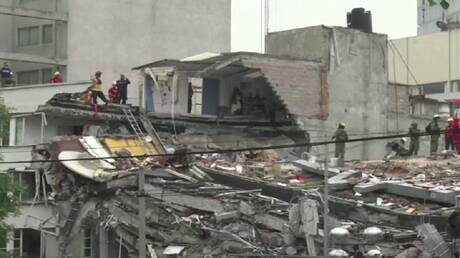
Scientists from the Oil Geophysics and Geology Institute, part of the Russian Academy of Sciences in Siberia, reported that the major earthquakes affecting vast regions of Russia and Asia are due to the collision of the Indian Plate with the Eurasian Plate. This finding comes at a time when concerns are rising about the impacts of earthquakes on residential areas and local economies.
Earthquakes are natural phenomena that significantly affect human life, leading to the destruction of buildings and infrastructure, as well as loss of life. In this context, scientists are striving to understand the underlying causes of these phenomena more deeply, which may assist in developing strategies to mitigate their effects.
Details of the Event
Studies indicate that the Indian Plate is moving northward, resulting in continuous pressure on the Eurasian Plate. This pressure generates stresses in the Earth's crust, leading to earthquakes. Numerous major earthquakes have been recorded in recent years, raising questions about how these phenomena impact the lives of people in affected areas.
The scientists at the Oil Geophysics and Geology Institute analyzed data from previous earthquakes and utilized computational models to understand the geological dynamics leading to these phenomena. The results suggest a close relationship between tectonic plate movement and the occurrence of earthquakes.
Background & Context
Historically, regions of Russia and Asia have experienced many devastating earthquakes, which have led to radical changes in the local environment. For instance, the earthquake in 2003 in North Ossetia resulted in widespread destruction. These historical events underscore the importance of researching the causes of earthquakes and how to predict them.
Earthquakes are part of a natural cycle that occurs over millions of years. However, human activities such as mining and oil extraction can influence these natural processes, complicating the geological landscape.
Impact & Consequences
The effects of earthquakes transcend geographical boundaries, impacting the global economy. Major earthquakes can disrupt supply chains, affecting global markets. Additionally, the psychological impact on affected populations can be profound, as many suffer from anxiety and fear of recurrence of these phenomena.
These challenges require international cooperation in research and development, where countries can share data and knowledge to improve strategies for mitigating the impacts of earthquakes. There is also a need for investments in infrastructure to enhance communities' resilience to these phenomena.
Regional Significance
Although major earthquakes in Russia and Asia may seem distant from the Arab region, their effects can reach Arab countries through global markets. Moreover, Arab nations, which lie on two tectonic plates, must be aware of potential risks.
Preparedness for earthquakes is essential in Arab countries, as earthquakes can cause significant damage in urban areas. Therefore, Arab governments should enhance awareness and training programs to address these risks.
In conclusion, this discovery represents an important step towards a better understanding of major earthquakes and their causes. Through ongoing research and international cooperation, the risks associated with these natural phenomena can be reduced.