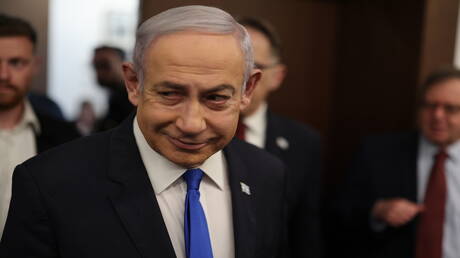
The Hebrew newspaper Yedioth Ahronoth has revealed updates regarding the potential presidential pardon for Israeli Prime Minister Benjamin Netanyahu, who is facing corruption charges. This information emerges at a time when the political situation in Israel is increasingly tense, raising questions about Netanyahu's political future.
The allegations against Netanyahu involve several corruption cases, including receiving illegal gifts and providing services to private interests. Despite these accusations, Netanyahu still enjoys strong support from certain segments of Israeli society, reflecting a deep divide in public opinion regarding corruption issues.
Details of the Event
Reports indicate that a presidential pardon for Netanyahu may be an option amid growing political pressures. Yedioth Ahronoth notes that there are discussions within the government about the possibility of offering a pardon as a means to resolve the political crisis the country is experiencing. However, this option may face fierce opposition from other political parties and civil society organizations.
A presidential pardon is considered a controversial step, as it may be viewed as an attempt to undermine justice and allow officials to evade accountability. At the same time, some supporters argue that a pardon may be necessary to achieve political stability in the country.
Background & Context
Historically, Israel has witnessed numerous political cases that have impacted the stability of governments. Netanyahu, who has served as Prime Minister multiple times, has faced numerous legal and political challenges. In recent years, the allegations against him have escalated, leading to repeated elections and an ongoing political crisis.
Presidential pardons in Israel are not a new phenomenon; the country has seen previous instances where pardons were granted to political figures, sparking widespread debate about the principles of justice and accountability. Given the current circumstances, any decision regarding a pardon for Netanyahu is likely to have significant implications for the political landscape.
Impact & Consequences
If a pardon is granted to Netanyahu, it could bolster his political standing, but at the same time, it may exacerbate divisions within Israeli society. Many citizens view a pardon as a green light for corruption, which could undermine public trust in government institutions.
On the other hand, failing to grant a pardon could worsen the political crisis, as Netanyahu may continue to face legal challenges, weakening his government and amplifying calls from the opposition for new elections.
Regional Significance
The developments surrounding Netanyahu's potential pardon are particularly significant for the Arab region, as they reflect internal conflicts in Israel and how these affect relations with Arab countries. Amid ongoing tensions, these issues may impact peace efforts and regional cooperation.
Any decision regarding a pardon for Netanyahu could influence Israel's stance on Arab issues, including the Palestinian cause. Additionally, the stability of the Israeli government has a direct impact on security and stability in the region.
In conclusion, the issue of a pardon for Netanyahu remains a focal point of debate and discussion in Israel, where politics and law intersect in complex ways. The international community must closely monitor these developments, as they may have far-reaching implications for the political landscape in the region.