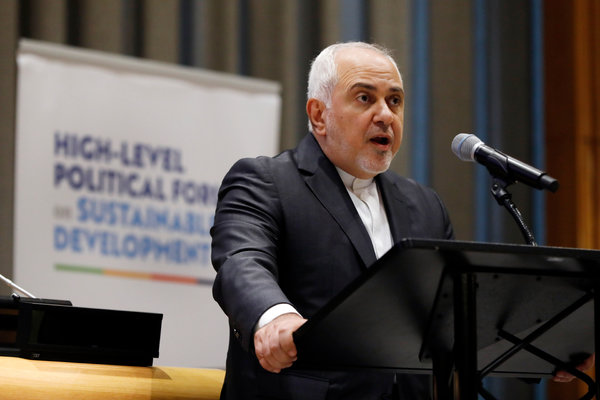
Former Iranian Foreign Minister Mohammad Javad Zarif has revealed detailed proposals that Tehran could accept as part of peace efforts with the United States. These statements are the first of their kind from a prominent figure in the Iranian regime, opening the door to new dialogue opportunities between the two nations. This initiative comes at a time when tensions between Tehran and Washington are escalating, making it essential to seek diplomatic solutions.
Zarif, who served as Iran's foreign minister for a long period, presented his vision on how to improve relations between Iran and the United States, emphasizing the importance of direct dialogue and mutual understanding. He pointed out that Iran is ready to discuss sensitive issues such as the Iranian nuclear program, provided that the United States takes tangible steps towards easing the sanctions imposed on Tehran.
Details of the Event
In his remarks, Zarif clarified that Iran does not seek to escalate tensions but rather wishes to find peaceful solutions. He noted that there are real opportunities for cooperation between the two countries, especially in areas such as combating terrorism and sharing intelligence. He affirmed that dialogue could lead to positive outcomes if taken seriously by both sides.
Zarif also added that Iran hopes for a positive response from the American side, indicating that the time has come to move past previous disagreements and focus on common interests. These statements come at a critical time, as pressures on the Iranian government are increasing from both domestic and external sources.
Background & Context
Historically, relations between Iran and the United States have been tense since the Islamic Revolution in 1979. These relations have experienced phases of severe tension, particularly after the United States withdrew from the Iranian nuclear agreement in 2018, leading to the imposition of strict economic sanctions on Tehran. Since then, Iran has tried to adapt to these conditions, while the United States has sought to pressure the Iranian regime to change its behaviors.
In recent years, the region has witnessed significant transformations, with Iran becoming a key player in many regional conflicts, complicating relations with the United States. However, there are increasing calls from both within Iran and outside for dialogue and negotiation as a means to resolve disputes.
Impact & Consequences
If the United States responds positively to Zarif's proposals, it could lead to a radical change in regional dynamics. This step could help ease tensions in the Middle East, where the interests of many countries overlap. Additionally, improving relations between Iran and the United States could open the door to greater cooperation in areas such as regional security and economics.
However, there are significant challenges facing this initiative, including deep-seated mistrust between the two parties. Both sides must take concrete steps to build trust, which may be difficult under current circumstances.
Regional Significance
The relationship between Iran and the United States directly affects Arab countries, as many Arab nations view Iran as a threat to their national security. If relations between Tehran and Washington improve, it could lead to a reevaluation of strategies by many Arab countries towards Iran. This could also contribute to enhancing stability in the region, benefiting all parties involved.
In conclusion, Zarif's statements represent an important step towards dialogue, but success depends on the political will from both sides. Opening channels of communication could mark the beginning of a new phase of cooperation, but it requires genuine efforts to build trust and achieve common interests.