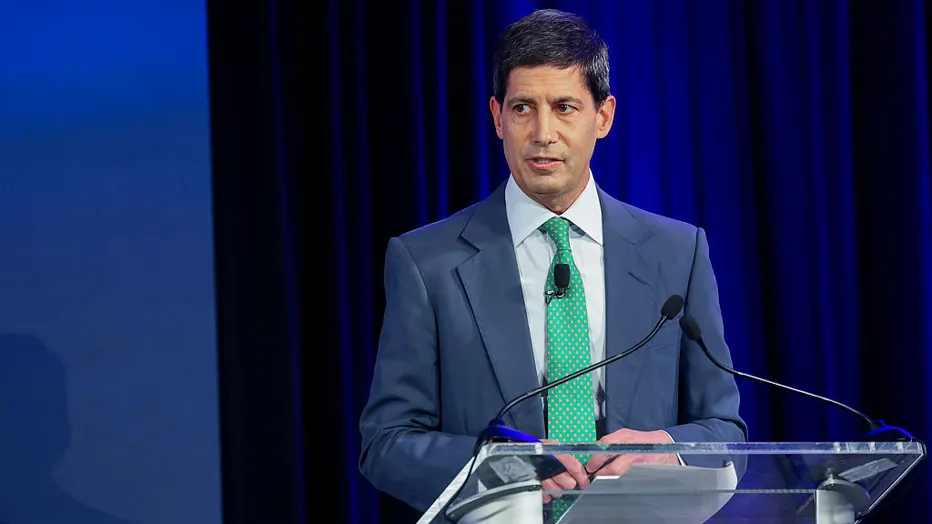
The U.S. Senate Banking Committee is preparing to hold a hearing on April 16 for the nomination of Kevin Warsh to be the next chair of the Federal Reserve, despite an ongoing criminal investigation that may affect his confirmation process. This situation arises as President Donald Trump seeks to secure Warsh's nomination, putting him at odds with some committee members who express concerns regarding the independence of the central bank.
One member, Senator Thom Tillis from North Carolina, has announced that he will not vote in favor of Warsh's confirmation until the criminal investigation is resolved. Nevertheless, Trump appears determined to proceed with the confirmation process, raising questions about how these political dynamics will influence the future of monetary policy in the United States.
Details of the Situation
The criminal investigation focuses on allegations that Jerome Powell, the current chair of the Federal Reserve, may have lied to Congress about the costs of bank office renovations. Powell has described this investigation as a pretext to pressure him into lowering interest rates, a demand made by Trump. While Congress has tasked the Federal Reserve with setting interest rates independently of political considerations, concerns are growing about a resurgence of inflation in the United States, particularly with rising energy costs due to the conflict in Iran.
Federal Judge James Boasberg has sided with Powell in this matter, rejecting the government's request to reconsider his decision to quash subpoenas related to the Federal Reserve. This means that the subpoenas will not proceed, leaving the status of the investigation unclear.
Background & Context
Historically, the Federal Reserve has enjoyed significant independence in its decision-making, which is considered a crucial factor in its success in combating inflation. However, increasing political pressures may undermine this independence. In recent years, the United States has witnessed a rise in political interventions in the central bank's affairs, raising concerns among economists and analysts about the potential impact on economic stability.
These events come at a sensitive time for the U.S. economy, as Trump seeks to bolster economic growth ahead of the upcoming presidential elections. Trump has indicated his support for investigations related to the Federal Reserve on several occasions, complicating the situation for Warsh.
Impact & Consequences
If Warsh is confirmed, it could significantly affect monetary policy in the United States. Warsh, who previously held a position at the Federal Reserve, faces criticism from some members of Congress, such as Senator Elizabeth Warren, who warned that he could serve as a "rubber stamp" for Trump's economic agenda. These dynamics could lead to further instability in financial markets, especially if political pressures on the Federal Reserve persist.
The continuation of the criminal investigation may also hinder Warsh's ability to make independent decisions, raising concerns about how this will affect inflation and interest rates in the future.
Regional Significance
The monetary policy of the United States has a significant impact on the global economy, including Arab countries. Any changes in interest rates or monetary policies could affect investment flows to the region, as well as oil and commodity prices. Under the current circumstances, Arab countries must closely monitor developments at the Federal Reserve, as any fluctuations in the U.S. economy could impact their economic stability.
In conclusion, Warsh's nomination for the Federal Reserve chairmanship is surrounded by numerous legal and political challenges, making it difficult to predict the future of monetary policy in the United States and its impact on the global economy.