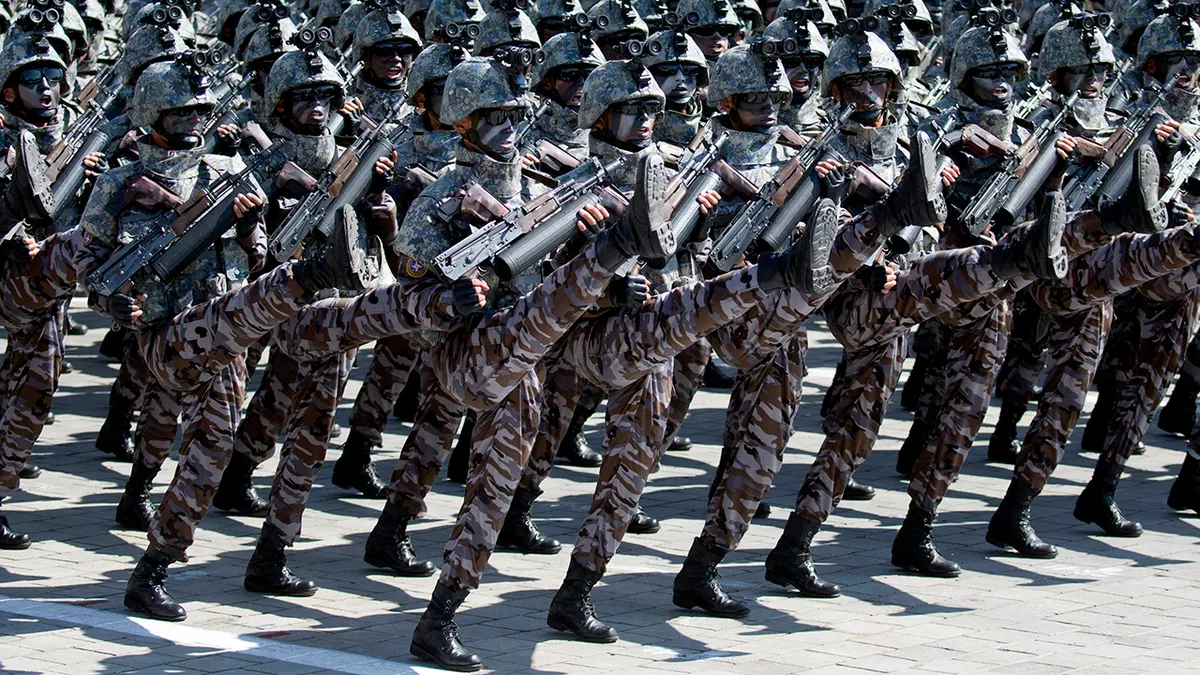
North Korean leader Kim Jong Un has once again confirmed his country's support for the Russian invasion of Ukraine, pledging to assist Moscow in achieving victory in what he described as a 'holy war'. These remarks were made during a meeting with senior military leaders in North Korea, where he emphasized the importance of cooperation between the two nations in facing international challenges.
These statements affirm the close relationship between Pyongyang and Moscow, as North Korea has supplied Russian forces with missiles, ammunition, and thousands of soldiers to support them in their fight against Ukraine. Analysts indicate that this military cooperation is part of a mutual aid exchange, where North Korea receives financial, technological, and military support from Russia.
Details of the Event
As the conflict in Ukraine intensifies, North Korea continues to strengthen its cooperation with Russia. Reports have shown that Pyongyang has sent shipments of weapons and ammunition to Russian forces, reflecting its commitment to support Moscow in this war. There are also indications that Russia is providing various forms of assistance to North Korea, including financial and technological support, which enhances Pyongyang's ability to face economic challenges.
These developments come at a time when international relations are experiencing increasing tensions, with growing concerns about the escalation of the conflict in Ukraine and its impact on regional and international security. In this context, North Korea is considered one of Russia's key allies, raising questions about the strategic dimensions of this cooperation.
Background & Context
Historically, the relationship between North Korea and Russia has been based on military and political cooperation. This relationship has seen a significant improvement in recent years, especially following the escalation of tensions between the United States and its allies on one side and North Korea on the other. Russian support for North Korea is part of Moscow's strategy to enhance its influence in the East Asian region.
In recent years, North Korea has conducted nuclear and missile tests that have raised international concerns, prompting it to seek strong allies like Russia. In turn, Russia aims to strengthen its alliances with countries facing pressure from the West, reflecting a shift in the geopolitical dynamics of the region.
Impact & Consequences
These developments are expected to affect the course of the conflict in Ukraine, as North Korean support could enhance Russian military capabilities. This cooperation may also complicate international efforts to mitigate the conflict and achieve peace in the region.
Furthermore, this collaboration could increase tensions between Russia and Western countries, as these relations serve as evidence of new alliances forming amid global crises. This situation reflects a shift in military and political strategies in the region, which may impact regional and international security.
Regional Significance
Considering the situation in the Arab region, this cooperation may have indirect effects on security and stability. Increased tensions in conflict areas like Ukraine could affect energy prices and global markets, reflecting on the Arab economy.
Additionally, the new alliances forming between countries may lead to changes in regional policies, prompting Arab nations to reassess their strategies in facing global challenges. Under these circumstances, it remains essential to monitor developments in Ukraine and their impact on the region.