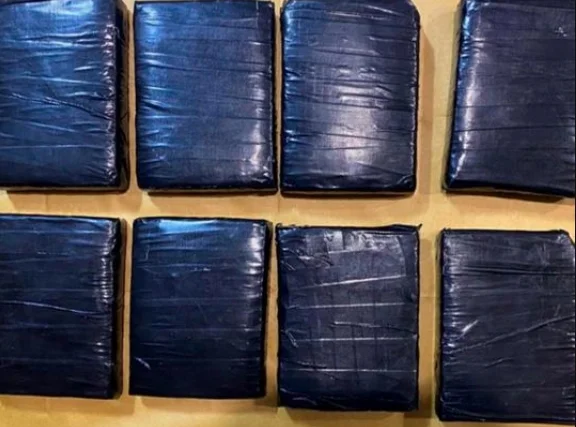
In a joint achievement, authorities in Singapore and the United Kingdom announced their success in thwarting an international drug trafficking network, seizing over 900 kg of cannabis that was headed for the UK. This success came after the discovery of an initial shipment on January 3, where 509 kg of cannabis was detected at the Pasir Panjang scanning station.
Following the discovery of the first shipment, the Central Narcotics Bureau (CNB) of Singapore launched a joint operation with UK agencies, including the UK Home Office, the Border Force, and the West Midlands Organised Crime Unit. This operation resulted in the seizure of a second shipment on February 25, where 412 kg of cannabis was confiscated from another container heading to the UK.
Details of the Operation
The involved agencies collaborated closely, leading to the dismantling of the international drug trafficking network and preventing a significant quantity of drugs from being distributed in the UK. The Deputy Director of Operations at CNB, Assistant Commissioner Aaron Tang, stated that international cooperation and intelligence sharing played a crucial role in thwarting this network.
Tang also added that partnerships with international law enforcement agencies ensure that there is no safe haven for those who trade in these deadly substances. For her part, the Director of International Operations at the UK Home Office, Brian McNeill, expressed gratitude to their partners in Singapore for their efforts in disrupting drug trafficking networks targeting the UK.
Background & Context
Drug trafficking is one of the largest challenges facing governments worldwide, causing numerous social and economic issues. In recent years, cross-border drug trafficking activities have increased, necessitating greater international cooperation to combat them. Singapore, known for its stringent drug laws, is one of the countries that adopts a strict policy towards drug trafficking, making it a key transit point for many international networks.
Historically, the UK has also faced significant drug-related problems, prompting it to enhance cooperation with other countries to combat this phenomenon. The joint operations between Singapore and the UK reflect both countries' commitment to addressing this global issue.
Impact & Consequences
This operation is considered a major success in drug enforcement efforts, demonstrating how international cooperation can positively impact public safety. Dismantling international networks not only contributes to reducing the amount of drugs available but also sends a strong message to drug traffickers that they will not be safe from legal pursuit.
This success also highlights the importance of intelligence sharing between countries, which can lead to thwarting more operations in the future. Furthermore, enhancing coordination among various agencies contributes to improving the effectiveness of security operations.
Regional Significance
As many Arab countries face challenges related to drug trafficking, this operation can serve as a model. International cooperation in drug enforcement can assist Arab nations in addressing this phenomenon, especially amid increasing drug smuggling across borders.
It is crucial for Arab countries to learn from the experiences of others in enhancing cooperation and information sharing to combat drug trafficking, contributing to protecting communities from its negative impacts.