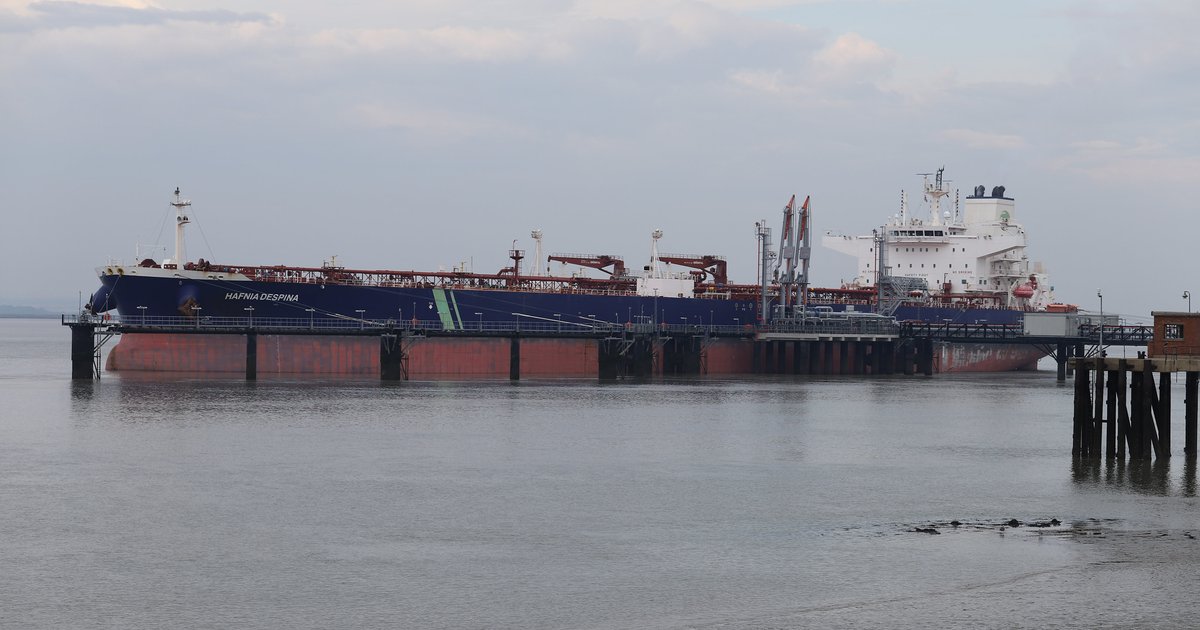
Oil prices have risen for the fourth consecutive day, with Brent crude increasing by 2% to reach $115.04 per barrel. This rise comes amid escalating conflict in the Middle East, leading to significant supply constraints that have directly impacted global markets.
Brent crude futures for May recorded an increase of $2.26, while West Texas Intermediate (WTI) futures for May rose by $3.10, reaching $105.96 per barrel, the highest level since March 9.
Details of the Event
Reports indicate that Iran's effective closure of the Strait of Hormuz, which carries about 20% of global oil supplies, has contributed to a 59% increase in Brent crude prices during March, marking the highest monthly rate ever. WTI also saw a 58% increase, the largest since May 2020.
In a related incident, the Kuwaiti oil tanker Salmi, capable of carrying up to 2 million barrels, was allegedly attacked by Iran in the port of Dubai, heightening concerns about potential oil spills in the region. Additionally, Iranian-backed Houthi forces targeted Israel with missiles, raising new worries about disruptions to shipping traffic in the Bab el-Mandeb Strait, a vital point connecting the Red Sea to the Gulf of Aden.
Background & Context
Historically, the Strait of Hormuz and Bab el-Mandeb are among the most important maritime passages in the world, through which a significant portion of global oil supplies flows. Ongoing conflicts in the region, particularly between Iran, the United States, and Israel, contribute to increasing instability in oil markets.
In recent years, the region has witnessed a surge in military tensions, significantly affecting oil prices. These conflicts have led to a redirection of Saudi oil exports through the Red Sea, with quantities directed to the port of Yanbu increasing to 4.658 million barrels per day, compared to an average of 770,000 barrels per day in January and February.
Impact & Consequences
Analyses confirm that the ongoing conflict in the region could lead to a dual crisis in energy supplies, as critical global energy arteries may face simultaneous pressures. Analyst Tim Waterer states that "this dual crisis represents a nightmare scenario for global supply chains."
Former U.S. President Donald Trump warned that the United States would destroy Iranian energy facilities if Tehran does not reopen the Strait of Hormuz. However, reports indicate that talks with Iran are still ongoing and making progress, despite significant gaps between the parties' demands.
Regional Significance
These developments directly affect Arab countries, many of which rely on oil exports as a primary source of revenue. Rising oil prices may have a positive impact on the economies of some producing countries, but they could also lead to increased costs for consumers in importing nations.
In light of these circumstances, it remains essential for Arab countries to monitor developments in the Middle East conflict and its impact on global oil markets, as stability in the region is vital for achieving sustainable economic growth.