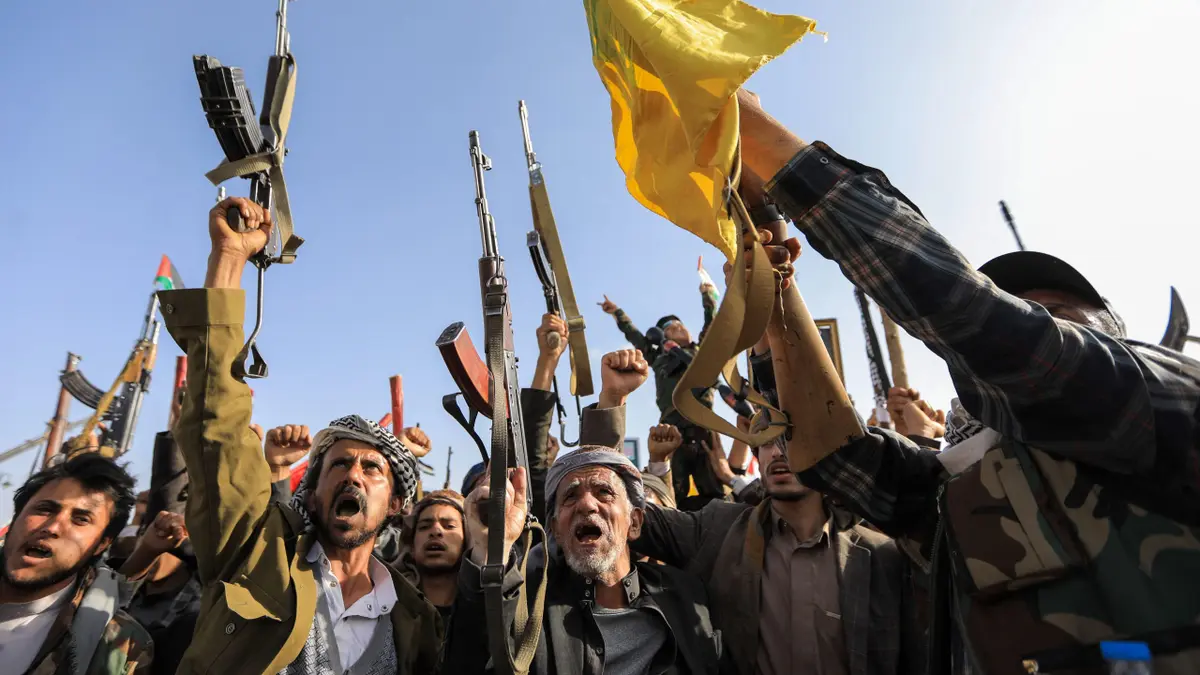
Oil prices have risen significantly in global markets after the entry of Iranian-backed Houthi fighters into the regional conflict, raising concerns about escalating chaos in energy markets. This comes at a time when the number of U.S. troops in the region has increased, further complicating the security and economic situation.
Amid these developments, fears have grown that the escalation of conflict could lead to greater disruptions in energy supplies, which directly reflects on oil prices. Oil prices recorded an increase of up to 3% in global markets, reflecting the growing anxiety over the conflict's impact on the stability of energy markets.
Details of the Event
The Houthis, who receive military support from Iran, have entered a new conflict in the Middle East, complicating the security landscape. This coincides with the United States bolstering its forces in the region, sending more soldiers and military equipment, reflecting its concerns over escalating tensions.
These events are part of a series of conflicts in the region, where the Houthis seek to expand their influence in Yemen, while the United States and its allies attempt to prevent Iran from strengthening its power in the area.
Background & Context
Historically, the Middle East has witnessed numerous armed conflicts that have significantly impacted global energy markets. Since the outbreak of the civil war in Yemen in 2015, the Houthis have become a major force in the conflict, supported by Iran, complicating the regional situation.
Iran and the Houthis are part of a resistance axis aiming to counter U.S. and Saudi influence in the region. These dynamics have led to increased military tensions, affecting the stability of global oil markets.
Impact & Consequences
Many reports predict that these events will lead to increased volatility in oil prices in the near future. Any escalation in the conflict could disrupt oil supplies, further raising prices and impacting the global economy.
The increase in U.S. forces in the region could also lead to military escalation, complicating peace efforts and heightening tensions among various powers. Under these circumstances, investors may find themselves in a difficult position, needing to assess the risks associated with investing in oil markets.
Regional Significance
Arab countries are directly affected by these developments, as rising oil prices could have negative impacts on the economies of some nations that heavily rely on oil as a primary source of revenue. Additionally, escalating military tensions could exacerbate humanitarian crises in the region, particularly in Yemen, which is suffering from a severe humanitarian crisis.
Ultimately, the current situation in the Middle East requires close monitoring by the international community, as any further escalation could threaten regional stability and impact global energy markets.