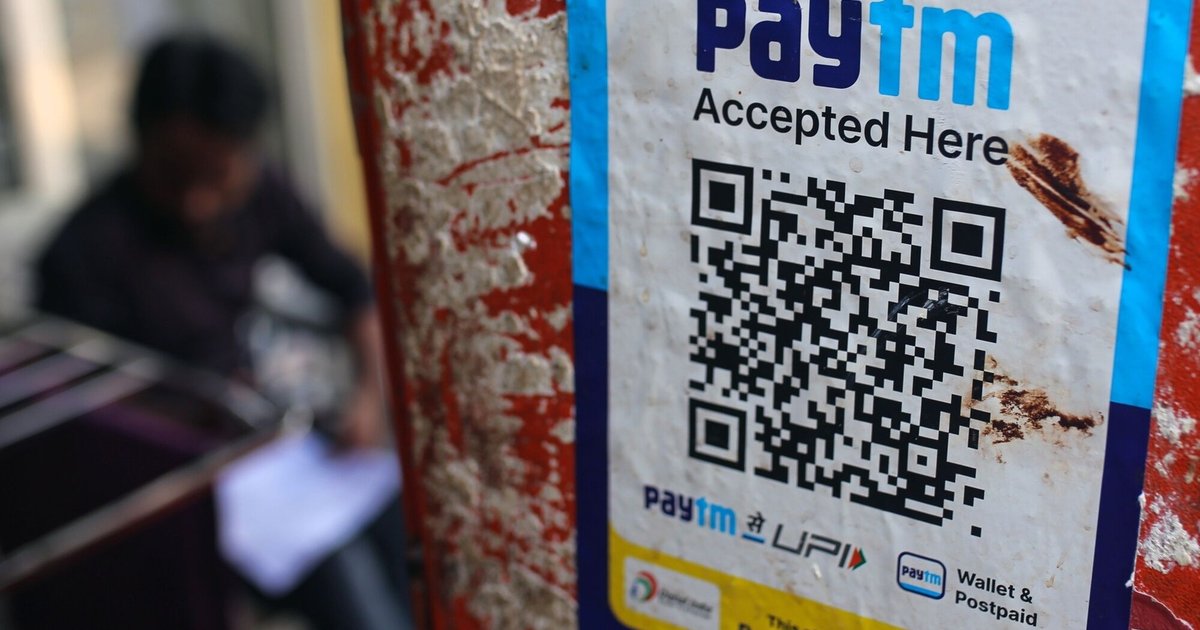
One 97 Communications, known as Paytm, has recovered most of its losses in trading on Monday after analysts indicated that the revocation of its payment bank license would not significantly affect the company's operations. This came after the company's shares experienced a decline of up to 8.4%, marking its largest daily drop in over three months, but they rebounded to trade down 1.5% by midday.
Last Friday, the Reserve Bank of India revoked the license of Paytm's payment bank, stating that "the overall management characteristics of the bank harm the interests of depositors as well as the public interest." One 97 holds a 49% stake in the payment bank, while founder Vijay Shekhar Sharma owns the remaining 51%.
Details of the Event
The payment bank license allows entities to accept small deposits and facilitate money transfers, but it does not permit lending. Analysts at Emkay Capital noted that they do not expect any financial or operational impact on Paytm, as all commercial agreements with the payment bank have been terminated, and the investment will be fully written off by March 2024.
Despite the stern tone of the decision, Paytm is legally protected. In January 2024, the Reserve Bank imposed restrictions on the payment bank, ordering it to stop accepting deposits due to non-compliance with regulations, including those related to customer audits and the use of funds and technological infrastructure. Since then, the bank's activity has significantly declined.
Background & Context
Founded in 2010, Paytm is one of India's leading fintech companies, providing digital payment and money transfer services. However, the company has faced significant challenges in recent years, including intense competition from other firms in the same sector, as well as stringent regulatory laws imposed by the Reserve Bank of India.
India is considered a promising market for fintech, with an increasing number of users turning to digital payments. However, regulatory challenges may impact the growth of companies in this sector. The revocation of the payment bank license reflects the difficulties companies face in complying with required standards.
Impact & Consequences
While the revocation of the payment bank license will not directly affect Paytm's current operations, analysts at BofA Global Research pointed out that there are future risks that may make it difficult for Paytm to obtain any potential licenses from the Reserve Bank of India. This could affect the company's plans for expansion and growth in the future.
This issue exemplifies the challenges faced by startups in the fintech sector, as they must adapt to changing laws and comply with regulatory standards. At the same time, these challenges may reduce competition in the market, potentially allowing larger companies like Paytm to strengthen their position.
Regional Significance
Many Arab companies are moving towards developing digital payment services, drawing lessons from global experiences such as that of Paytm. The revocation of the payment bank license can serve as an important lesson for Arab companies on how to navigate regulatory challenges. Strengthening compliance with laws can help build greater trust between consumers and businesses.
In conclusion, the revocation of Paytm's payment bank license marks a turning point in the company's journey, as it must now focus on strengthening its core business and complying with regulatory standards to avoid any future repercussions.