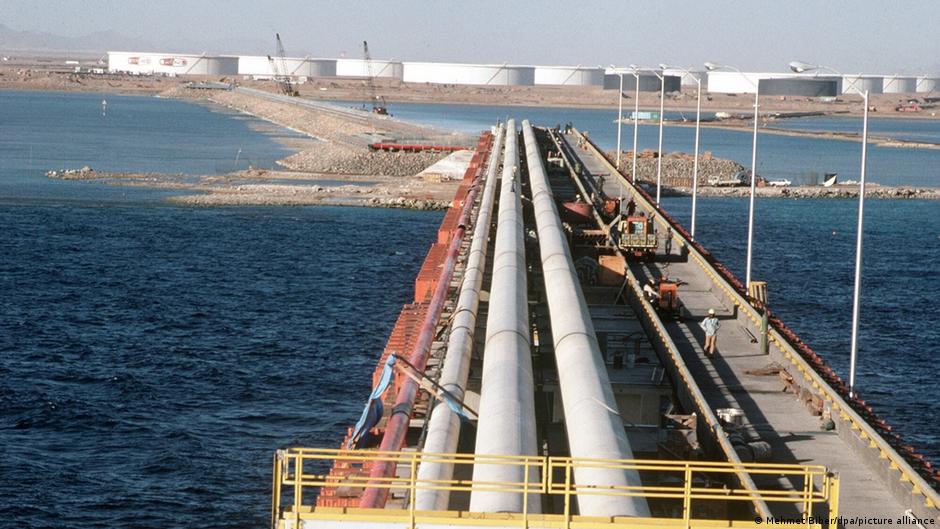
Gulf states are moving towards decreasing their dependence on the Strait of Hormuz, a vital transit point for oil, amidst escalating tensions with Iran. The recent conflict involving the United States, Israel, and Iran has brought to light the risks facing the global energy market.
For the past four decades, the Strait of Hormuz has been a key hub for oil transportation, but the Iran-Iraq War in the 1980s demonstrated its vulnerability, as oil tankers were attacked. In response, Saudi Arabia established the East-West Pipeline to transport oil to the Red Sea, followed by the UAE with the Habshan-Fujairah Pipeline.
Details of the Current Situation
In February, tensions escalated when war broke out between the United States, Israel, and Iran, prompting Tehran to threaten to close the strait. This threat led to the halting of hundreds of tankers, affecting about 20% of global energy supplies. In this context, Gulf leaders began considering new plans to bypass the strait and secure their oil exports in the long term.
Reports indicate that Saudi Arabia, the UAE, and other Gulf states are contemplating the construction of new pipelines to avoid the Strait of Hormuz. These plans include creating new pipelines alongside existing structures and expanding export terminals on alternative coasts.
Background & Context
The Strait of Hormuz, through which approximately 15 million barrels of oil pass daily, is considered one of the most important waterways in the world. However, political tensions and military conflicts have made it a weak point in the energy market. Since the Iran-Iraq War, Gulf states have taken steps to reduce their dependence on this strait, but challenges remain.
Although the current Saudi pipeline operates at full capacity, the need to increase capacity has become urgent. Experts indicate that expanding pipelines could take years, but there is an immediate need to secure oil supplies under the current conditions.
Impact & Consequences
Gulf states are seeking to minimize their exposure to risks by developing new infrastructure. Experts believe these plans could be the only solution to reduce reliance on the Strait of Hormuz. However, political and financial challenges may hinder the implementation of these projects.
Additionally, there are calls from international organizations such as the International Energy Agency to build new pipelines connecting Iraq to Turkey, which could enhance energy security in the region. These projects may contribute to reducing dependence on the Strait of Hormuz and providing safer alternatives.
Regional Significance
The situation regarding the Strait of Hormuz is crucial for global energy security and has significant implications for Gulf and Arab economies. The ongoing tensions highlight the need for diversification in energy routes and sources.
In conclusion, as Gulf states navigate these challenges, their efforts to develop alternative energy routes may reshape the dynamics of energy supply and security in the region.