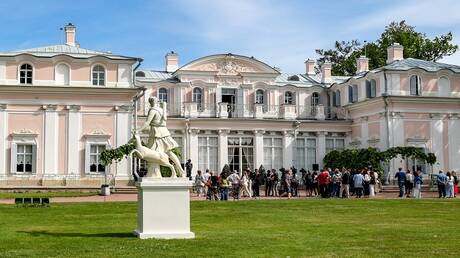
The Catherine Palace in St. Petersburg, Russia, is preparing to open the Chinese Pavilion to visitors in June 2026, after completing comprehensive restoration work that has meticulously revived its historical decorations, reflecting the grandeur of the past and the history of cultural relations between Russia and China.
This initiative is part of the Russian government's efforts to enhance cultural tourism, as the Catherine Palace is one of the most prominent tourist attractions in St. Petersburg, drawing visitors from around the world. The Chinese Pavilion, designed in the 18th century, reflects the cultural and artistic influences of China on Russian architecture and is considered a symbol of cultural exchange between the two countries.
Event Details
The restoration work carried out in the Chinese Pavilion includes the reconstruction of original decorations, including vibrant colors and intricate carvings that characterize traditional Chinese art. Modern techniques have been employed to ensure the preservation of the fine details that reflect the history of this cultural landmark. The opening of the pavilion is expected to contribute to an increase in the number of tourists coming to the city, thereby boosting the local economy.
Additionally, the pavilion will feature a collection of exhibits highlighting traditional Chinese arts and crafts, providing visitors with a rich cultural experience. This project is part of a broader strategy to enhance cultural tourism in Russia, as the government seeks to attract more international visitors.
Background & Context
The Catherine Palace was established in the 18th century and is considered one of the most significant historical landmarks in Russia. Historically, the palace has been a center for culture and the arts, hosting numerous cultural and artistic events. The Chinese Pavilion is part of this cultural heritage and reflects the historical ties between Russia and China, which date back centuries.
Over the years, Russian-Chinese relations have seen significant developments, with cultural and commercial ties between the two countries strengthening. The opening of the Chinese Pavilion at the Catherine Palace is an important step in enhancing these relations and reflects Russia's commitment to fostering cultural cooperation with China.
Impact & Consequences
The opening of the Chinese Pavilion is expected to have a significant impact on tourism in St. Petersburg, with an anticipated increase in visitors from China and other countries. This could contribute to boosting the local economy and creating new job opportunities in the tourism sector.
Moreover, this event could enhance mutual understanding between different cultures, as the pavilion will provide a platform for the exchange of ideas and arts between Russia and China. This project is also an opportunity to promote cultural tourism in the region, which may encourage the development of more cultural projects in the future.
Regional Significance
The opening of the Chinese Pavilion at the Catherine Palace is an important event not only for Russia but also for the Arab region. Cultural relations between Arabs and Chinese date back to ancient times, as trade routes connected the two cultures. This event could inspire Arab countries to enhance cultural cooperation with China, potentially leading to joint cultural projects that promote mutual understanding.
Furthermore, cultural tourism is considered an area from which Arab countries can benefit, as it can contribute to boosting the local economy and providing new job opportunities. Therefore, the experience of the Catherine Palace could serve as a model to be emulated in the region.
In conclusion, the opening of the Chinese Pavilion at the Catherine Palace represents an important step towards enhancing cultural relations between Russia and China, and it strengthens St. Petersburg's position as a cultural tourism destination. This event is expected to have a positive impact on tourism and the local economy, emphasizing the importance of culture as a means of communication between peoples.