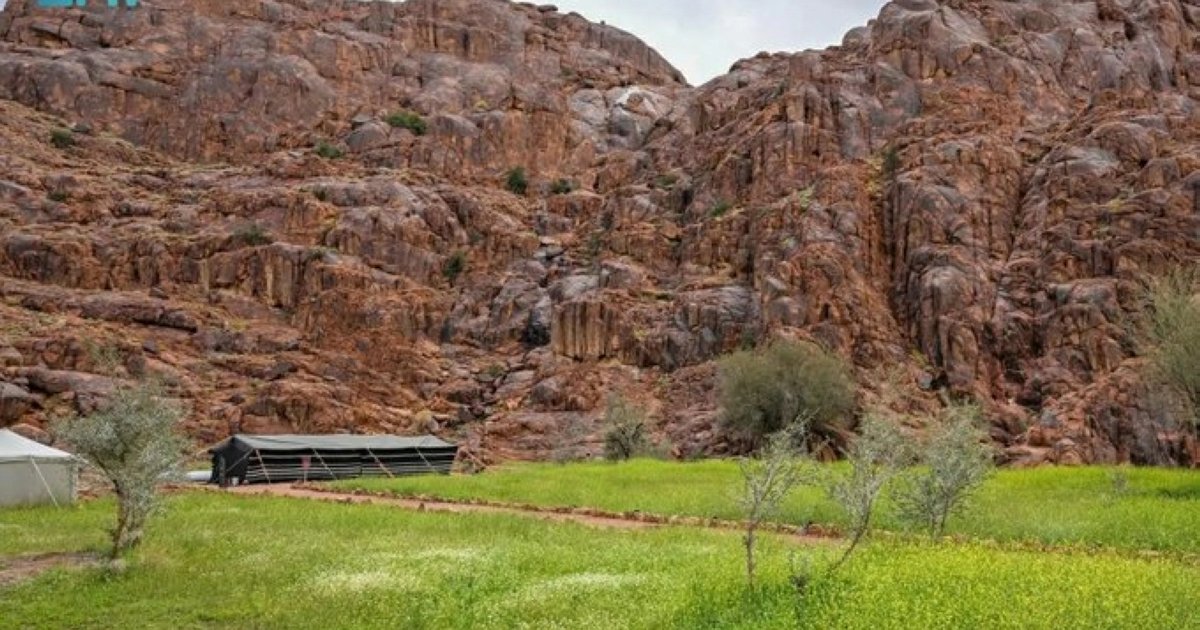
The Hail region in the Kingdom of Saudi Arabia has experienced an unprecedented influx of visitors, as many flocked to the plains and mountains to enjoy the stunning natural scenery brought about by the recent scattered rains. These rains not only revived nature but also rekindled the traditions of hiking and camping in the desert, making the area an ideal destination for nature lovers.
Among the prominent sites attracting visitors are the Aja and Salma mountains, as well as the sand dunes in Qena and the outskirts of the city of Jubbah. These areas are characterized by their unique beauty, adorned with vibrant greenery and flowing rivers, making them perfect spots for family outings and picnics.
Event Details
The rains that fell on the Hail region were the result of unstable weather conditions, leading to some flooding in certain areas. However, these floods had a positive impact on outdoor activities, as people embraced camping and hiking in the desert areas, taking advantage of the mild weather and breathtaking landscapes.
Traffic increased on the roads leading to the desert areas, with many seeking to enjoy the spring atmosphere that the region is known for. Some visitors noted that this experience was a wonderful opportunity to connect with nature and rekindle relationships with family and friends in a comfortable setting.
Background & Context
Historically, the Hail region is one of the areas rich in history and culture in the Kingdom of Saudi Arabia. This region has been a center for many Arab tribes and contains numerous archaeological sites that reflect its ancient history. Additionally, the desert nature of Hail makes it a distinctive destination for visitors, especially during the spring when flowers bloom and life flourishes.
The rains that fall during this time of year are a blessing for agriculture and the environment in general, as they help improve soil quality and increase agricultural yields. Furthermore, these rains enhance domestic tourism, as many seek to enjoy the beauty of nature.
Impact & Consequences
This natural phenomenon presents an opportunity to boost tourism in the Hail region, potentially contributing to the development of the local economy through an increase in visitor numbers. This rise in tourism activity also revives social traditions that encourage family gatherings and outdoor activities.
Local authorities expect this phenomenon to continue in the coming weeks, which may lead to further visits and activities in the area. Additionally, this atmosphere may encourage the organization of cultural and entertainment events to attract more visitors.
Regional Significance
Many Arab regions are experiencing similar climatic fluctuations, sparking interest among tourists and investors in the field of eco-tourism. The Hail experience could serve as a model for other areas seeking to enhance domestic tourism and promote a connection with nature.
In conclusion, the rains that have fallen on the Hail region represent a golden opportunity to rediscover the beauty of nature and cultural traditions, thereby enhancing national identity and encouraging domestic tourism.