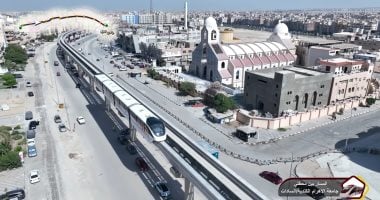
The Monorail East Nile opened its doors to the public for free today, celebrating the launch of the project's first phase. This event is part of the Egyptian government's efforts to enhance public transportation and alleviate traffic congestion.
The Monorail East Nile project aims to provide a fast and efficient means of transport connecting the new administrative capital with several vital areas in Cairo. This project is considered part of a comprehensive plan to develop transportation infrastructure in Egypt, contributing to improving the quality of life for citizens.
Event Details
The event witnessed a large turnout of citizens who enjoyed free rides on the monorail, with guided tours organized to explain the project and its significance. Entertainment shows were also provided for children and their families, adding a joyful atmosphere to the occasion.
The monorail extends over a distance of 54 kilometers and includes 12 stations, with expectations to significantly reduce daily travel times. This project is one of the giant initiatives reflecting Egypt's Vision 2030 in developing transportation means.
Background & Context
Public transportation projects in Egypt are a government priority, as the government seeks to improve the public transport network to address the challenges faced by major cities. The Monorail East Nile project is part of these efforts, having been announced several years ago and having seen actual work commence in recent years.
Historically, Egypt has witnessed many major transportation projects, such as the subway, which has significantly contributed to reducing traffic congestion. However, the expansion into modern transportation projects like the monorail represents a new step towards achieving sustainable development.
Impact & Consequences
The Monorail East Nile project is expected to improve traffic flow in Cairo, providing an effective alternative to traditional transportation. It will also help reduce carbon emissions from private vehicles, contributing to better air quality in the capital.
Furthermore, the project will enhance investment opportunities in areas surrounding the monorail stations, which may lead to increased economic activity in these regions. It will also create new job opportunities during the construction and operational phases.
Regional Significance
Modern transportation projects in Egypt serve as a model for other Arab countries facing similar transportation challenges. These projects can inspire neighboring countries to develop similar infrastructures that contribute to improving the quality of life for their citizens.
In light of the economic and environmental challenges facing the region, developing public transportation is a crucial step towards achieving sustainable development. Additionally, cooperation among Arab countries in this field can facilitate the exchange of experiences and achieve common goals.
In conclusion, the opening of the Monorail East Nile represents an important step towards improving the transportation system in Egypt, reflecting the government's commitment to developing infrastructure. This project is expected to have a positive impact on citizens' lives and contribute to achieving sustainable development.