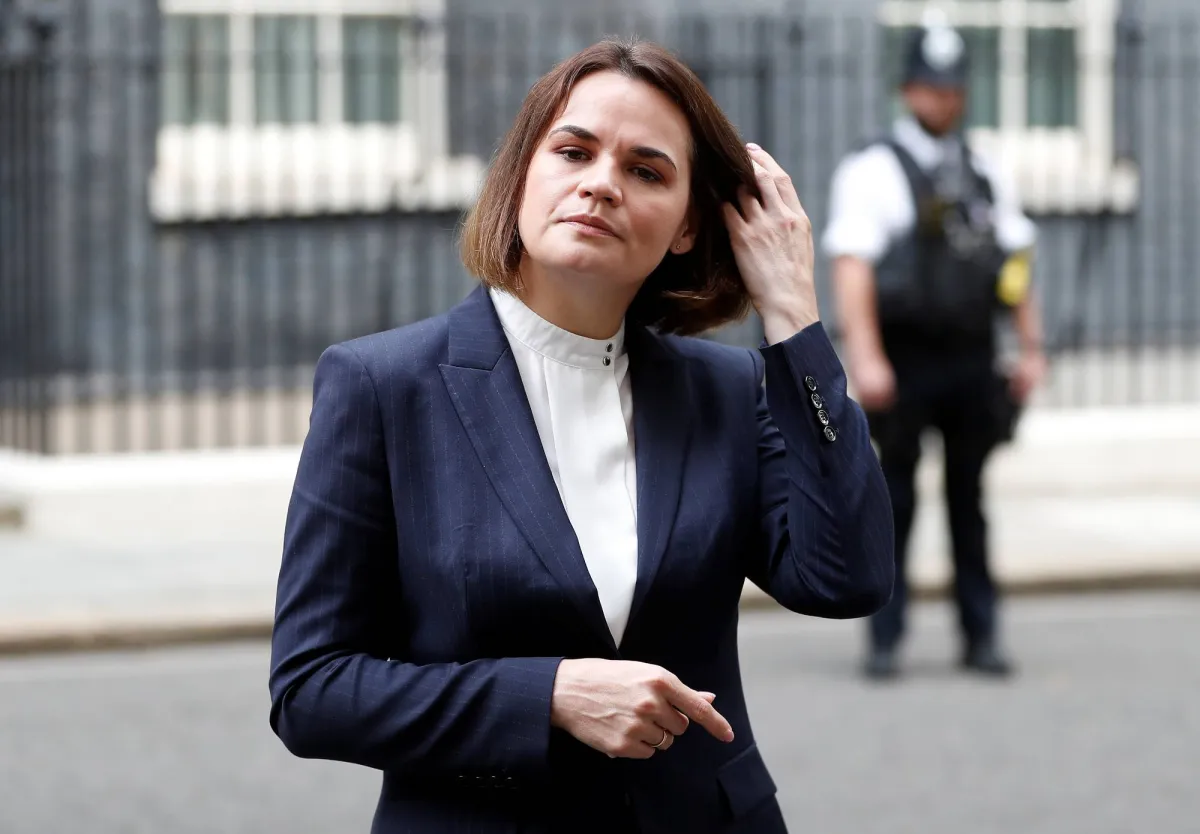
Svetlana Tsikhanouskaya, the Belarusian opposition leader in exile, urged against easing European Union sanctions imposed on her country, asserting that such actions would strengthen the existing regime. This statement was made during a press conference in the Lithuanian capital, Vilnius, where she emphasized the importance of continued international pressure on the Belarusian regime.
Tsikhanouskaya stated that easing sanctions, particularly regarding potash fertilizers, would only enhance the regime's ability to fund repression and the war in Ukraine. She noted that there are calls from some U.S. officials to resume the transit of Belarusian fertilizers, which contradicts the interests of the Belarusian people.
Details of the Event
Tsikhanouskaya's remarks came in response to calls from U.S. Special Envoy John Cole, who urged Lithuania to resume the transit of Belarusian fertilizers and hold a high-level meeting with the leadership in Minsk. Tsikhanouskaya considered these calls to be an unacceptable pressure on EU countries, particularly Lithuania, which is one of the prominent supporters of the Belarusian opposition.
In this context, Tsikhanouskaya stressed the importance of ongoing communication with American partners, warning that any easing of sanctions could strengthen the Belarusian regime, thereby increasing the suffering of the Belarusian people and enhancing the regime's capacity to implement its repressive policies.
Background & Context
Belarus, under the leadership of President Alexander Lukashenko, seeks to consolidate its power amidst increasing international pressure. Since the controversial presidential elections in 2020, which saw widespread protests against the regime, many Western countries have imposed sanctions on Belarus. These sanctions include restrictions on trade and investment, as well as freezing the assets of certain high-ranking officials.
Tsikhanouskaya, who lives in exile, aims to unify opposition efforts and expand international support for her cause. She has received significant backing from EU countries and the United States, reflecting international concern over human rights violations in Belarus.
Impact & Consequences
If sanctions are eased, it could lead to severe repercussions for the internal situation in Belarus. The regime is likely to benefit from additional financial resources to bolster its repression of the opposition, thereby increasing instability in the country. Furthermore, easing sanctions might encourage Lukashenko to take more aggressive steps against the opposition, complicating the situation in the region.
On the international front, easing sanctions could lead to a divergence in positions among Western countries, weakening the united front against human rights violations in Belarus. This divergence could open the door for other countries to provide support to the regime, further complicating the conflict.
Regional Significance
The events in Belarus are part of the larger picture of political conflicts worldwide, reflecting tensions between authoritarian regimes and Western democracies. For the Arab region, these events underscore the importance of international support for opposition movements against repressive regimes, potentially encouraging democratic movements in Arab countries.
Moreover, ongoing pressure on Belarus may impact relations between Arab states and the West, as Arab countries seek to balance their economic and political interests.
In conclusion, Tsikhanouskaya's calls for tightening sanctions on Belarus serve as a reminder of the importance of international support for the opposition in the face of authoritarian regimes, reflecting the ongoing challenges faced by democracy worldwide.