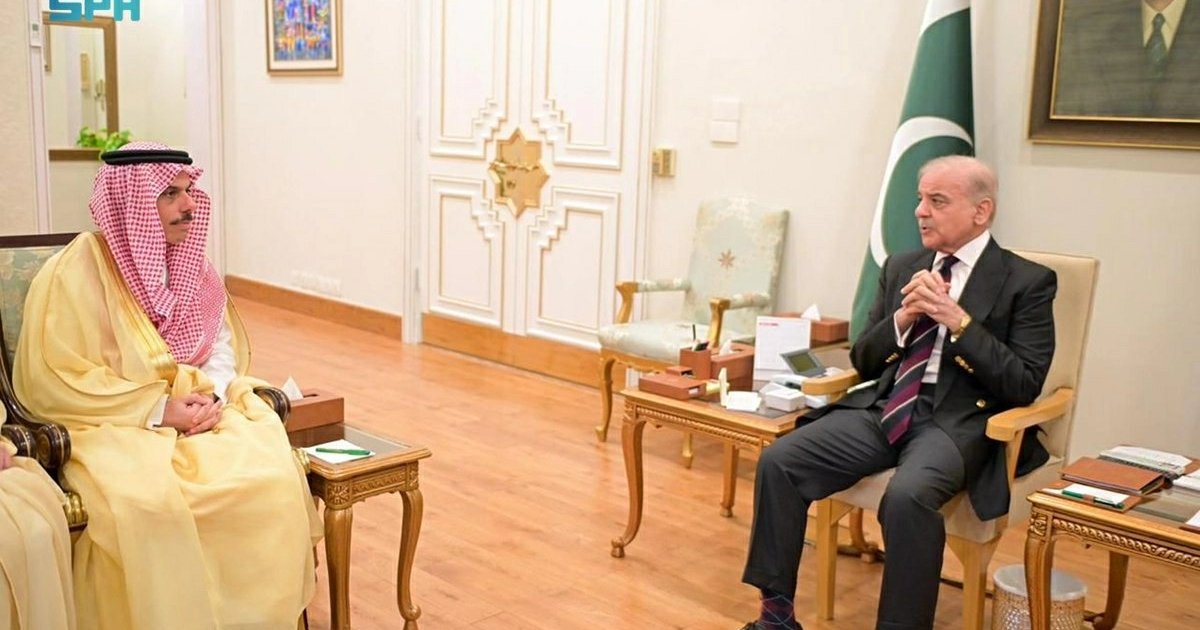
During a meeting in Islamabad, Pakistani Prime Minister Shahbaz Sharif confirmed his country's support for Saudi Arabia in the face of regional challenges. This meeting took place at a sensitive time as diplomats from Islamic countries discuss efforts to end the ongoing conflict in the region. Sharif emphasized the importance of cooperation among Islamic nations in addressing regional challenges.
Sharif welcomed Prince Faisal bin Farhan, the Saudi Foreign Minister, in the Pakistani capital, where they discussed topics related to regional stability and the efforts being made to resolve the ongoing conflict. According to a statement from Sharif's office, the Pakistani Prime Minister praised the restraint shown by Saudi Arabia amidst current crises, affirming that Pakistan will always stand by the Kingdom.
Details of the Meeting
During the meeting, opinions were exchanged regarding the current situation in the region, with Sharif stressing the importance of enhancing bilateral relations between Pakistan and Saudi Arabia. The diplomatic efforts made by Pakistan to contribute to conflict resolution were also reviewed, reflecting Pakistan's commitment to peace and stability in the region.
The meeting also addressed economic and security issues of mutual concern, emphasizing the need to enhance cooperation in various fields such as trade and investment. Prince Faisal expressed significant interest in strengthening economic relations between the two countries, reflecting a shared desire for sustainable development.
Background & Context
Historically, the relationship between Pakistan and Saudi Arabia has been strong, characterized by religious, cultural, and economic ties. These relations have seen notable development in recent years, especially in light of the security challenges facing the region. Saudi Arabia is considered one of Pakistan's key strategic partners, providing financial and investment support for numerous projects.
At the same time, the region faces multiple challenges, including armed conflicts and humanitarian crises, necessitating a concerted effort among Islamic countries. Pakistan has shown its readiness to contribute to peace efforts on several occasions, reflecting its commitment to regional stability.
Impact & Consequences
Sharif's affirmation of Pakistan's support for Saudi Arabia carries significant implications at the regional level. As tensions escalate in the area, this support serves as an indicator of unity among Islamic countries in confronting challenges. It also reflects Pakistan's desire to enhance its role as a mediator in regional conflicts.
This meeting is expected to contribute to strengthening cooperation between the two countries across various sectors, potentially leading to improved economic and security conditions in the region. Furthermore, Pakistan's support for Saudi Arabia may bolster its position in international forums and increase its influence on regional issues.
Regional Significance
The relationship between Pakistan and Saudi Arabia serves as a model for cooperation among Islamic nations, potentially inspiring other countries to enhance their collaboration in facing shared challenges. Amid the crises affecting many Arab nations, strengthening relations among Islamic countries is a crucial step toward achieving stability.
In conclusion, this meeting between Shahbaz Sharif and Prince Faisal bin Farhan represents a positive step toward enhancing regional cooperation, reflecting Pakistan's commitment to peace and stability in the area. Pakistan's support for Saudi Arabia could have positive repercussions at both the regional and international levels, increasing the chances of achieving peace in the region.