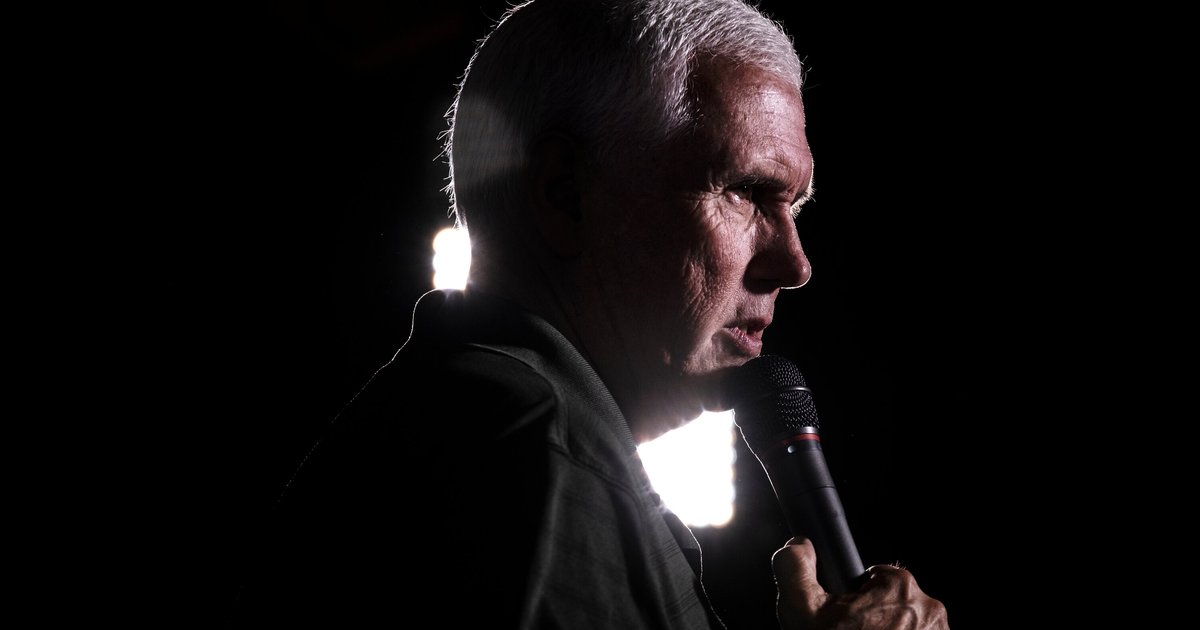
In striking remarks, former U.S. Vice President Mike Pence affirmed that Iran has been a persistent problem for 47 years, expressing pride in former President Donald Trump's decision to "pull the trigger" and take action against the Iranian regime. These comments came during his appearance on the program "Balance of Power," where Pence stressed the importance of completing the mission in Iran to ensure it cannot develop nuclear weapons.
Pence pointed out that Iranian threats are not limited to the United States but also encompass its allies in the region. He called for decisive steps to ensure that these threats do not recur in the future, asserting that the time has come to deliver a decisive blow to the Iranian regime.
Details of the Event
Pence's statements come at a time when relations between the United States and Iran are increasingly strained, especially following Trump's withdrawal from the Iranian nuclear deal in 2018. This decision sparked widespread controversy, with some viewing it as a necessary step to halt Iran's nuclear ambitions, while others considered it an unjustified escalation.
Pence, who served as Trump's vice president during his presidency, confirmed that the actions taken against Iran were essential to protect U.S. national security. He noted that Iran has posed a continuous threat for decades and that it is time to put an end to these threats.
Background & Context
The history of U.S.-Iranian relations is filled with tensions and conflicts. Since the Islamic Revolution in 1979, Iran has become one of the largest challenges facing U.S. foreign policy. Relations between the two countries escalated significantly after the terrorist attacks on September 11, 2001, when Iran was classified as a major supporter of terrorism.
In recent years, concerns over Iran's nuclear program have increased, prompting the international community to impose strict sanctions on Tehran. However, these sanctions have not led to significant changes in the behavior of the Iranian regime, complicating the situation further.
Impact & Consequences
Pence's remarks are part of a broader discussion regarding U.S. policy towards Iran. While some believe that military pressure is the optimal solution, others argue that dialogue and diplomacy are the right path to address Iranian challenges. These differing opinions reflect divisions within U.S. politics on how to deal with Iran.
If the United States continues to take military action against Iran, it could escalate the conflict in the region, potentially affecting regional stability and increasing tensions between major powers.
Regional Significance
The U.S.-Iranian relationship directly impacts Arab countries, as Iran is a key player in many regional conflicts. From Iraq to Syria and Lebanon, Iran seeks to expand its influence, raising concerns among Arab nations, particularly those that view Iran as a threat to their national security.
In this context, any escalation in U.S.-Iran relations could have serious repercussions for security and stability in the region, necessitating clear positions from Arab states regarding these developments.
Pence's statements on Iran remain part of the broader debate on how to address the challenges posed by Tehran. As tensions continue, the question remains on how to achieve stability in the region without escalating military conflict.