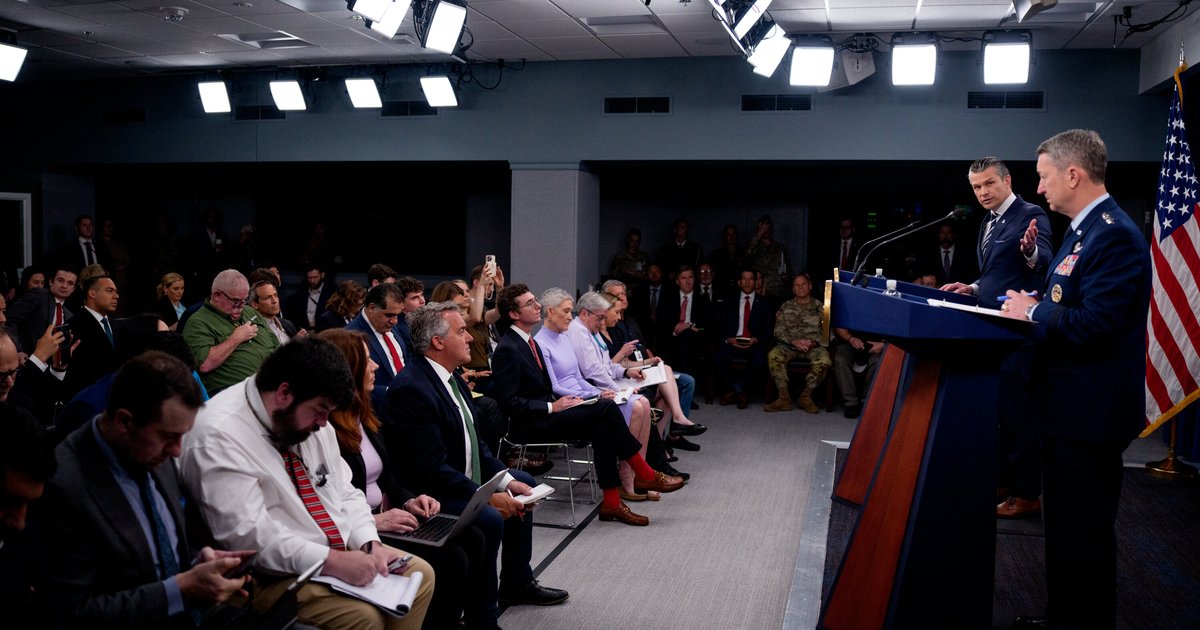
A report by Politico indicates that the United States Department of Defense (Pentagon) has devised a plan to strike Iran, with the goal of relieving former President Donald Trump from the consequences of war crimes. This development occurs as Trump threatens Iran with opening 'the gates of hell' if it fails to respond to his demands concerning the Strait of Hormuz.
The report, prepared by Paul McLeary and Leo Shane III, suggests that the Pentagon is seeking a legal exit strategy to protect Trump from potential liabilities associated with military operations against Iran. This move is part of the increasing tensions between the United States and Iran, which have recently escalated significantly.
Details of the Situation
Amid rising tensions, Trump has stated in his remarks that he will take strict actions against Iran if it does not cooperate in opening the Strait of Hormuz. This waterway is vital for global trade, with approximately 20% of the world's oil passing through it. The American threats come at a sensitive time, as Iran seeks to expand its influence in the region.
According to the report, the Pentagon is working on developing military strategies that align with international laws, which may help Trump avoid accusations of war crimes. This reflects the growing concern in Washington regarding the potential consequences of any military action against Iran.
Background & Context
Historically, U.S.-Iran relations have seen increasing tensions since the United States withdrew from the nuclear deal in 2018. This withdrawal led to heightened U.S. sanctions on Iran, impacting the Iranian economy and sparking internal protests.
In recent years, Iran has intensified its military activities in the region, including its support for militias in Iraq and Syria. These activities have raised alarms for the United States and its allies, prompting them to consider military options to address Iranian threats.
Impact & Consequences
If the Pentagon's plan is executed, it could lead to significant military escalation in the region, adversely affecting regional security. Moreover, any military action against Iran could provoke strong reactions from Tehran, further increasing instability in the Middle East.
Potential repercussions include rising oil prices and heightened tensions between the United States and its allies on one side and Iran on the other. This situation could impact the global economy and exacerbate humanitarian crises in the region.
Regional Significance
The U.S. plans to strike Iran may directly affect neighboring Arab countries, which could face retaliatory responses from Iran. Additionally, escalating tensions could lead to increased sectarian divisions in the region, threatening stability in countries like Iraq, Syria, and Lebanon.
Ultimately, the situation in the region remains complex, with political and military interests overlapping, making it difficult to predict the next steps. The current situation requires effective diplomatic dialogue to avoid military escalation that could have dire consequences for all parties involved.