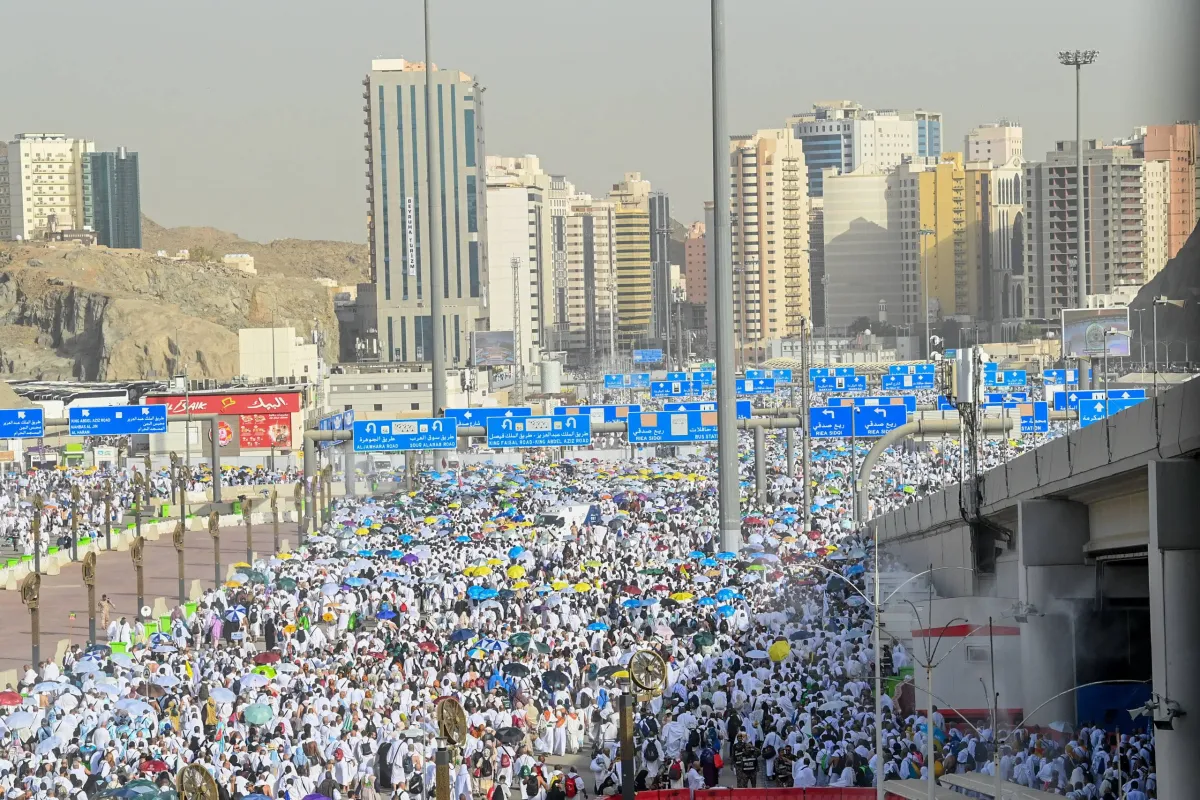
Pilgrims at the Sacred House of Allah welcomed the Days of Tashreeq after completing the ritual of throwing stones at the Great Jamrah. King Salman bin Abdulaziz expressed his gratitude to Allah for the honor of serving the Two Holy Mosques and caring for the pilgrims. The king prayed for Allah to accept their Hajj, rituals, and acts of worship, extending his congratulations on the occasion of Eid al-Adha.
The pilgrims performed the ritual of throwing stones after being blessed by Allah to stand on the plain of Arafat and spend the night at Muzdalifah, where a sense of security and tranquility prevailed. After throwing the stones, the pilgrims began to shave their heads and shorten their hair to exit the first state of Ihram, then headed to the Sacred Mosque to perform the Tawaf of Ifadah and the Sa'i between Safa and Marwah, before returning to Mina to complete their rituals during the Days of Tashreeq.
Event Details
The movement of pilgrims towards the Jamarat Bridge witnessed an organized and safe flow, with pilgrims distributed across the levels according to the prepared organization, facilitating a smooth return to their accommodation sites. In this context, Crown Prince Mohammed bin Salman emphasized the importance of the efforts made to maintain the country's security, praising the dedication of all military and security sectors in serving the pilgrims.
During his reception of Eid al-Adha congratulations at Mina Palace, Crown Prince Mohammed bin Salman expressed his congratulations to citizens, residents, and pilgrims of the Sacred House of Allah, praying for Allah to return this occasion with goodness to the Islamic nation. He also thanked all workers in the military and security sectors for their efforts in ensuring the safety of the pilgrims.
Background & Context
Serving the Two Holy Mosques is a priority for the Kingdom of Saudi Arabia, which strives to provide the best services for pilgrims. Major General Mohammed Al-Basami, Director of Public Security, pointed out that since its establishment, the Kingdom has made serving the Two Holy Mosques the core of its mission. These efforts continue under the guidance of wise leadership, contributing to enhancing the level of commitment to the regulations governing Hajj activities.
Colonel Dr. Mishal Al-Harithi recited a poem during the reception ceremony, attended by several princes and senior figures, reflecting the significance of this religious and social event in the Kingdom.
Impact & Consequences
These efforts contribute to enhancing security and safety during the Hajj season, reflecting the Kingdom's ability to organize this major event with precision. The success in organizing Hajj enhances the Kingdom's status on the international stage and reflects its commitment to serving the guests of Allah.
The challenges facing the region require more coordination and cooperation among countries, and interior ministers from Gulf Cooperation Council countries expressed their appreciation for the significant efforts made by Saudi Arabia in organizing the Hajj season and providing comprehensive services.
Regional Significance
The Hajj season is an important event not only for the Kingdom but for the entire Islamic world, as Muslims from various parts of the globe gather in one place to perform their rituals. This gathering strengthens social and religious bonds among Muslims and reflects Islamic unity.
In conclusion, the Kingdom of Saudi Arabia remains a leader in providing services to pilgrims, reflecting its deep commitment to serving Islam and Muslims. The success of the Hajj season showcases the Kingdom's ability to face challenges and provide the best services to the guests of Allah.