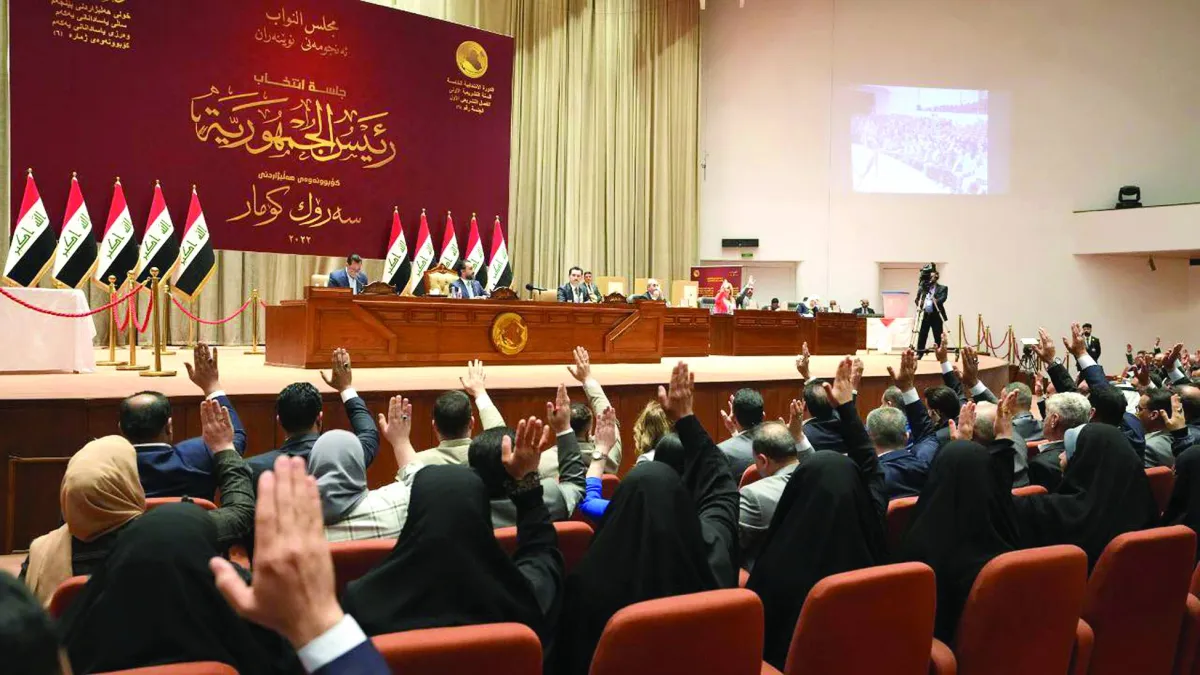
The political situation in Iraq remains stagnant, as major political forces have been unable to overcome internal divisions. The election of the President and the appointment of the Prime Minister are still pending, complicating the political landscape in the country.
The Iraqi parliament is anticipating its upcoming session next Saturday, chaired by Heibat al-Halbousi, at a time when the Shiite Coordination Framework is suffering from evident internal splits. Despite public statements issued by political forces, they lack the practical solutions necessary to overcome the current crisis.
Details of the Situation
The current Iraqi government continues to operate without full powers, complicating its ability to manage the country and face growing challenges. A source from the Coordination Framework confirmed that a meeting of the forces held last Monday ended in internal division regarding their positions on armed factions, reflecting additional complexities in resolving the presidential and prime ministerial appointments.
The political partnership in Iraq, especially among the Shiite and Kurdish components, remains hostage to disagreements over candidates for presidential and executive positions. The budget dispute between Erbil, Sulaimaniyah, and Baghdad continues to affect relations between the federal government and the Kurdistan Region.
Background & Context
In a related context, Saleh Al-Obeidi, the special representative of the leader of the Sadr Movement, Moqtada Al-Sadr, denied rumors about Al-Sadr's approval of Nouri Al-Maliki's nomination for the premiership, asserting that the statements attributed to him are forged. Al-Obeidi clarified that the Sadr Movement's stance on Al-Maliki's nomination is linked to the consensus of other Shiite forces.
Pressure is mounting on political forces to provide effective solutions, as an Iraqi politician close to the government indicated that political forces fear changing Al-Maliki's nomination due to accusations of succumbing to former U.S. President Donald Trump's stance. Meanwhile, the path to completing constitutional obligations in Iraq remains complicated and requires genuine internal consensus.
Impact & Consequences
Despite the political stalemate, life has returned to the Iraqi parliament following the announcement of a temporary ceasefire between the United States and Iran. Lawmakers held a regular session and voted on the formation of several parliamentary committees, reflecting a desire to resume legislative and oversight work.
It is noteworthy that Iraq experienced a night of serious security incidents before the ceasefire announcement, as several areas in Baghdad were subjected to rocket attacks and airstrikes, resulting in civilian casualties and numerous injuries. Although the Iraqi government claims neutrality in the conflict between Washington and Tehran, Iran-aligned factions have dragged Iraq into the fray.
Regional Significance
Events in Iraq have impacted regional stability, as the Iraqi Foreign Ministry seeks to support any regional and international efforts that contribute to containing crises. The ministry welcomed the announcement of the ceasefire, considering it a step towards reducing tensions in the region.
At the same time, concerns continue regarding the war's impact on the Iraqi economy, with estimates indicating that Iraq has lost between $6 billion and $10 billion during the war period. With the ceasefire in effect, the government is focusing on revitalizing the economy by accelerating oil exports, which account for 95% of the country's financial resources.