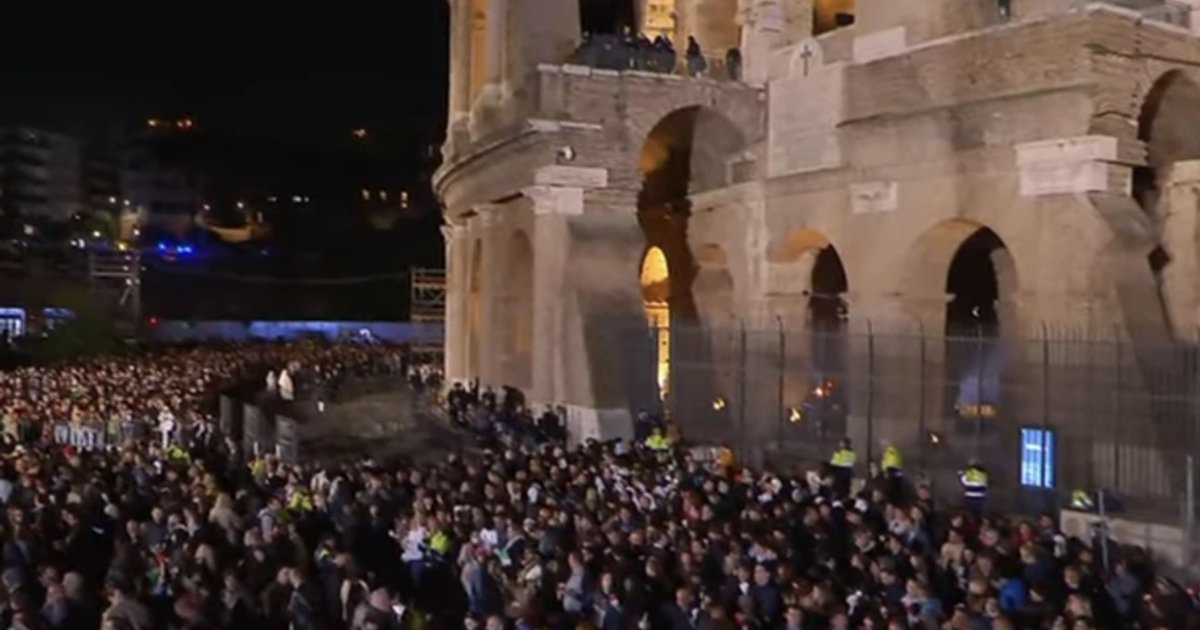
In a solemn event, Pope Leo XIV led approximately 30,000 Catholic faithful in the Stations of the Cross at the Colosseum in Rome, on Good Friday, April 3. This event is considered an annual tradition that gathers believers in a place that has witnessed numerous historical and religious events.
Pope Leo XIV is the second pope to carry the cross during the Stations of the Cross, as he walked through the ancient Roman ruins that bore witness to the suffering of many Christians. He followed a tradition initiated by Pope John Paul II between 1980 and 1994, reflecting the continuity of this spiritual practice.
Event Details
The celebration included 14 stations representing the stages of Christ's suffering, with meditations written by the late Pope Francis. This year, the event was led by Pope Leo XIV, who invited the faithful to reflect on the meanings of faith, hope, and love in their daily lives.
Father Francesco Paton, who prepared the meditations, spoke about the importance of the Stations of the Cross as a means to embody Christian values in the real world. He emphasized that this celebration is not reserved for those living perfect lives, but is a call for everyone to reflect on how to embody faith in daily life.
Background & Context
The roots of the Stations of the Cross celebration date back to the Middle Ages, where it was practiced as a means to remember Christ's suffering. The Colosseum, considered a symbol of ancient Roman culture, has become an ideal location for this celebration due to its rich history and the suffering associated with early Christians.
In recent years, the Catholic Church has faced numerous challenges, including issues related to sexual scandals and criticisms regarding its handling of social issues. Nevertheless, the Stations of the Cross celebration remains a symbol of solidarity with human suffering and reflects the Church's commitment to confronting challenges with a spirit of hope and faith.
Impact & Consequences
The Stations of the Cross celebration is an opportunity for believers to renew their faith, enhancing the spirit of community and solidarity. Pope Leo XIV's participation in this event reflects the Church's commitment to its social and spiritual responsibilities and underscores the importance of empathy toward the suffering of others.
These celebrations come at a sensitive time, as the world faces numerous humanitarian crises, making it essential for the Church to adopt an active role in supporting social and humanitarian causes.
Regional Significance
In the Arab region, where historic Christian communities reside, the Stations of the Cross celebration symbolizes communication between cultures and religions. This event reflects the importance of interfaith dialogue and promotes values of tolerance and understanding among different communities.
The Pope's participation in these celebrations may also contribute to strengthening relations between the Catholic Church and Islamic communities, opening new avenues for cooperation and understanding in facing common challenges.