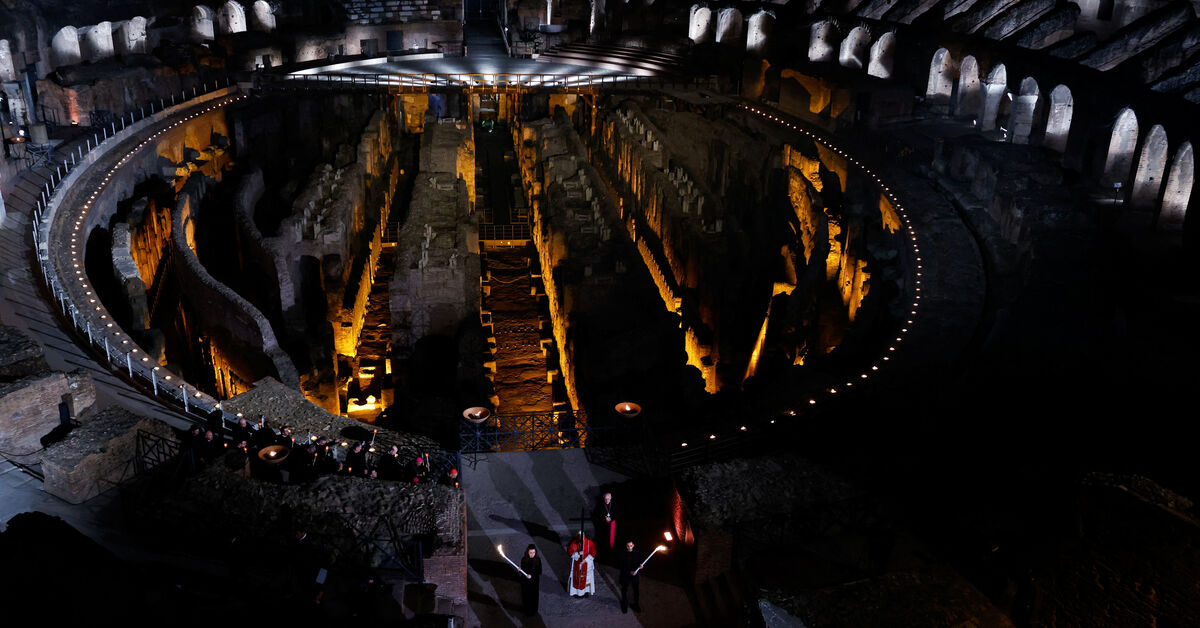
On Friday evening, Pope Leon led a candlelit religious service inside the famous Colosseum in Rome, where thousands of Catholics gathered to pray for war orphans and deported migrant children. The Pope emphasized the importance of this humanitarian issue, warning world leaders that their decisions would one day be judged by God.
This service is part of the commemoration of Good Friday, the day Christians remember the crucifixion of Christ. Pope Leon listened to a moving collection of spiritual reflections read aloud within this historic monument, adding a profound spiritual dimension to the occasion.
Event Details
Thousands of believers gathered at the Colosseum, where candles illuminated the atmosphere, and everyone participated in prayer and reflection. The event included poignant words about the suffering of children who have lost their families due to wars and conflicts, as well as children who have been deported from their countries in search of a better life.
Pope Leon, known for his humanitarian stances, expressed deep concern about the current situations in the world, especially in light of ongoing conflicts affecting millions of lives. He pointed out that this service is not merely a religious ritual but a call to reflect on our human responsibility towards those who suffer.
Background & Context
Historically, the Colosseum is considered a symbol of Roman culture and history, having witnessed many significant events over the ages. However, its use today as a platform for prayer for humanitarian causes reflects a shift in how the Church views social and political issues. Pope Leon, who has become a strong voice against wars, aims through such events to highlight the suffering of the most vulnerable groups in society.
In recent years, the intensity of conflicts in various regions around the world has escalated, exacerbating the refugee and migrant crisis. Children have become the most affected by these crises, with many losing their families and facing harsh conditions in host countries.
Impact & Consequences
This service demonstrates how the Church can play an important role in raising awareness of humanitarian issues. Pope Leon's call for world leaders to take responsibility reflects the urgent need for change in policies affecting millions of lives. Such events are also a call for the international community to work together to find lasting solutions to migration and displacement crises.
By highlighting the suffering of children, Pope Leon reinforces the idea that humanity should be at the heart of political decisions. The impact of this message may extend to decision-makers in various countries, potentially leading to positive changes in policies related to migration and asylum.
Regional Significance
In the Arab region, where many countries suffer from ongoing conflicts, this event serves as a reminder of the importance of working towards peace and stability. Humanitarian crises in Arab countries, such as Syria and Yemen, have led to many children losing their families, making Pope Leon's message even more significant.
This service illustrates how religious leadership can play a role in promoting peace and understanding among different cultures. Pope Leon's call for world leaders to work for humanity is an urgent appeal for all countries, including Arab nations, to adopt more humane policies towards migrants and refugees.