In recent years, Portugal has experienced a qualitative leap in its arms industry, positioning itself as one of the European nations with a relatively independent defense sector. According to José Neves, an official at the AED Cluster Portugal industry association, the defense sector generated revenues estimated at around 2.1 billion euros last year, with over 160 Portuguese organizations operating in the fields of aviation, space, and defense.
Portugal is also striving to meet the goals set by NATO, which require member countries to spend 5% of their GDP on defense. In this context, the Portuguese government has purchased frigates from Italy and tanks from Germany, in addition to new fighter jets, although it remains uncertain whether these jets will be sourced from the United States or Europe.
Details on Defense Procurement
In 2025, Portuguese Defense Minister Nuno Melo expressed doubts about the purchase of F-35 fighter jets from Lockheed Martin, an agreement that was nearly finalized. Melo voiced concerns regarding the United States' commitment to NATO under former President Donald Trump, emphasizing the need to consider European solutions.
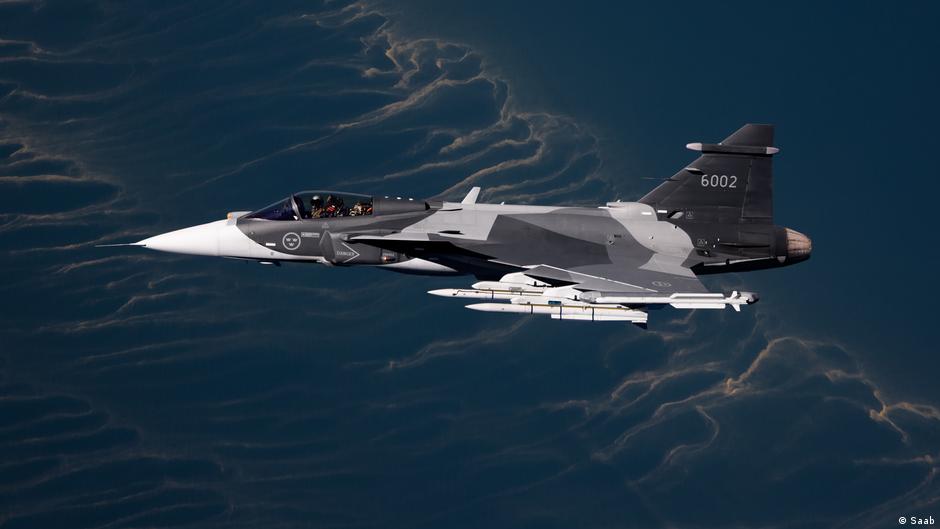
In this context, Swedish company SAAB is seeking to sell its Gripen-E fighter jet series to Portugal, which it considers a genuine European solution. Daniel Bostad, Vice President of the Gripen program at SAAB, stated that this fighter jet would enhance Portugal's and Europe's strategic defense capabilities through long-term industrial partnerships.
Background & Context
Historically, Portugal has heavily relied on imported military equipment, but in recent years, Portuguese companies have begun to bolster their production capabilities. Neves pointed out that the country has become a serious player in this field, providing approximately 20,000 jobs in the sector.
Companies like Critical Software, which develops a flight simulator for the Gripen-E fighters, collaborate with global defense firms such as Airbus, reflecting the evolution of the Portuguese industry and its ability to compete in the global market.
Impact & Consequences
These developments raise questions about Portugal's ability to achieve true independence in its defense sector, especially given its partnerships with the United States. Bruno Oliveira Martins from the Oslo Peace Research Institute believes that Portugal's uncritical stance towards the use of the U.S. airbase in the Azores during the Iraq-Iran war indicates that the Portuguese government may lack the necessary autonomy in military matters.
Despite this, there is an urgent need to develop a future European defense industry, which requires importing quality equipment.
Regional Significance
The growth of Portugal's arms industry is significant not only for the country but also for the broader European defense landscape. As nations grapple with security challenges, the ability to produce and maintain defense capabilities independently becomes increasingly vital.
In conclusion, while Portugal's arms industry is on the rise, its future independence and sustainability will depend on navigating complex international relationships and enhancing domestic production capabilities.