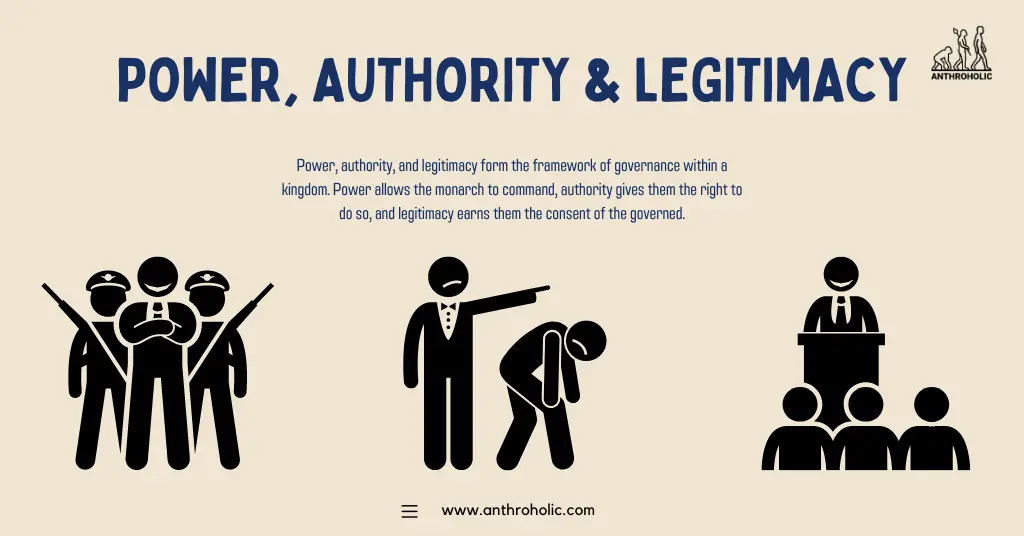
Power and authority are closely intertwined, influencing each other significantly. As power wanes, authority collapses, a historical lesson that recurs through the ages.
This concept is clearly manifested in human history, where we witness the rise and fall of nations. Countries are typically formed through brilliant leaders, while they fall due to corruption or madness. This complex interaction between power and authority is what determines the fate of nations and shapes their historical trajectories.
Event Details
Throughout the ages, we have seen numerous examples that affirm this relationship. For instance, in ancient times, empires expanded thanks to prominent military leaders, but they soon faced collapse due to internal corruption or weak leadership. This pattern is also repeated in modern times, where we see nations collapsing due to internal conflicts or rampant corruption.
Power does not only refer to military strength but also includes economic and political power. When a state loses its economic strength, its authority begins to erode. This has happened in many countries that have experienced crippling economic crises leading to a loss of trust in governments.
Background & Context
Historically, there have been numerous examples of how great leaders were able to build strong nations, such as Alexander the Great or Napoleon Bonaparte. However, corruption and mismanagement can lead to the collapse of those nations. In modern times, we can see how some political systems that were once strong have collapsed due to corruption or inefficiency.
This historical context provides us with valuable lessons about the importance of good leadership and transparency in governance. Countries that enjoy strong leadership capable of facing challenges are more likely to survive and grow.
Impact & Consequences
These dynamics affect political and social stability in nations. When power fades, it leads to instability, opening the door to internal conflicts and revolutions. This is what we have witnessed in many Arab countries in recent years.
Moreover, the collapse of authority can lead to political chaos, affecting regional and international security. Countries suffering from weak authority often become susceptible to external interventions, complicating the situation further.
Regional Significance
In the Arab region, we have seen many examples of this interaction between power and authority. The Arab revolutions that erupted in 2011 were a result of the loss of trust in ruling regimes, which were plagued by corruption and mismanagement. These revolutions demonstrated how the loss of power can lead to the collapse of authority.
Understanding these dynamics is vital for Arab countries seeking to build strong political systems capable of facing challenges. History teaches us that power and authority must go hand in hand to ensure stability and growth.
In conclusion, the lesson of power and authority remains present at every stage of history. The relationship between them is not merely theoretical; it is a reality that recurs in every time and place. Therefore, nations striving for survival and growth must recognize the importance of this relationship and work to strengthen it.