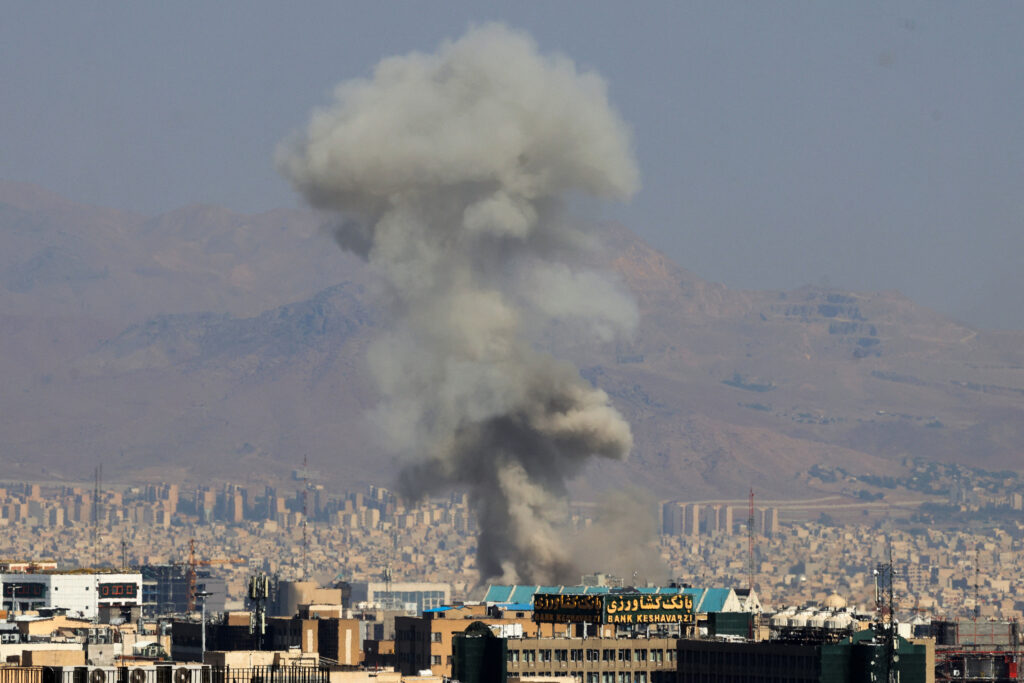
Strong explosions rocked the Iranian capital, Tehran, causing panic among residents. At the same time, U.S. President Donald Trump affirmed that military pressure on Iran will continue, indicating that the United States will not back down from its stance regarding Iranian activities in the region.
Reports indicate that the explosions occurred in several different locations within the city, leading to significant material damage, while accurate information about human casualties has not yet been reported. These events come at a very sensitive time, as tensions between Iran and the United States escalate, raising fears of military escalation in the region.
Details of the Incident
According to local sources, the explosions occurred in areas close to military facilities, raising questions about whether these attacks were targeting strategic sites. Reports have stated that the explosions were very powerful, causing nearby buildings to shake.
In a related context, Trump stated during a press conference that the United States will continue to pressure Iran, noting that the U.S. administration remains committed to confronting destabilizing Iranian activities in the region. These statements come after a series of tensions between the two countries, including attacks on commercial ships in the Arabian Gulf.
Background & Context
Historically, relations between Iran and the United States have seen increasing tensions since the Islamic Revolution in 1979. The economic sanctions imposed on Iran have exacerbated the situation, as Tehran seeks to enhance its military capabilities in the face of external pressures.
In recent years, the United States has increased its military presence in the region, raising concerns in Iran and prompting it to take escalatory steps. Additionally, the nuclear agreement signed in 2015, from which the United States withdrew in 2018, was a turning point in relations between the two countries.
Impact & Consequences
These explosions are seen as a sign of escalating tensions and may lead to military reactions from Iran. If U.S. military pressure continues, Iran may take escalatory steps, increasing the risk of a comprehensive military conflict in the region.
The current events may also impact global markets, as any escalation in the region could lead to rising oil prices and increased instability in financial markets. Additionally, tensions may affect relations between other countries in the region, especially those closely tied to the United States.
Regional Significance
Developments in Iran are of great importance to Arab countries, as any escalation could affect regional security. Countries like Saudi Arabia and the UAE may find themselves in the crosshairs of Iranian threats, increasing the need for enhanced security cooperation among Arab states.
Moreover, the escalation in relations between Iran and the United States could lead to increased tensions in Iraq, Syria, and Lebanon, where Iran-linked militias are present. This situation could negatively impact stability in these countries and increase civilian suffering.
In conclusion, the situation in Tehran remains under observation, as any new developments could significantly affect regional and international security. It is crucial for Arab states to remain vigilant and work on strengthening their security strategies to counter any potential threats.