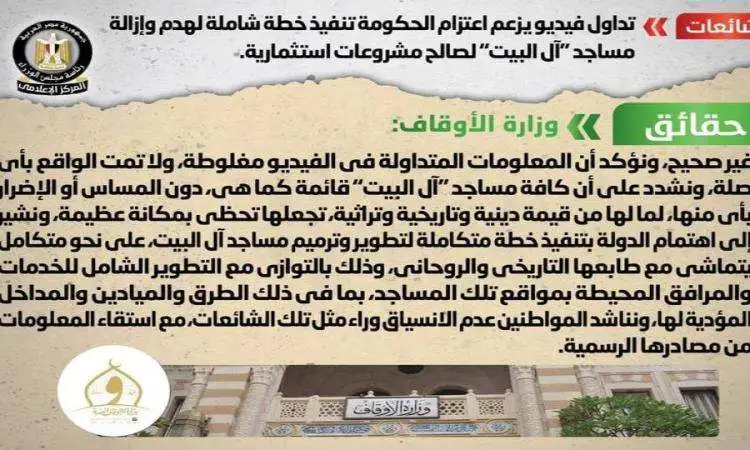
The Supreme Council of Sufi Orders has praised the efforts made by the Egyptian state in developing the Al-Bayt mosques, affirming the importance of these steps in enhancing cultural and religious identity. This appreciation comes at a time when the country is witnessing a growing interest in Islamic heritage.
In an official statement, the council confirmed that the development of the Al-Bayt mosques reflects the state's commitment to preserving Islamic heritage and providing an exceptional religious experience for citizens and visitors. It also noted that these efforts contribute to enhancing religious tourism, which benefits the national economy.
Details of the Development Efforts
The state’s efforts include the development of the Al-Bayt mosques, which are among the most prominent Islamic landmarks in Egypt. Restoration and renovation work is underway to meet the needs of visitors and worshipers. A significant budget has been allocated for this project, reflecting the priority the government places on religious heritage.
Cultural and religious events have also been organized at these mosques to raise awareness of the importance of Islamic heritage. The Supreme Council of Sufi Orders believes that these initiatives reflect the state’s vision to enhance spiritual and cultural values in society.
Background & Context
Historically, the Al-Bayt mosques are significant landmarks in Egypt, dating back to various periods of Islamic history. These mosques have undergone numerous changes over the centuries, making them centers of worship and culture.
In recent years, government efforts to develop these landmarks have increased, with several projects launched aimed at restoring the mosques and improving services provided to visitors. This trend is part of a broader strategy to enhance religious tourism in Egypt.
Impact & Consequences
The development of the Al-Bayt mosques has multiple positive effects, as it contributes to enhancing the cultural and religious identity of Egyptians. It also boosts Egypt's status as a religious tourism destination, attracting visitors from around the world.
Furthermore, these efforts contribute to strengthening the local economy by increasing the number of visitors, which positively impacts sectors related to tourism and services.
Regional Significance
The Al-Bayt mosques are symbols of Islamic heritage, and their development may encourage other countries in the region to take similar steps to preserve their cultural and religious heritage. It can also foster cooperation among Arab countries in the field of religious tourism.
In conclusion, this development represents an important step towards enhancing cultural and religious identity in Egypt, reflecting the state’s commitment to preserving Islamic heritage and promoting religious tourism.