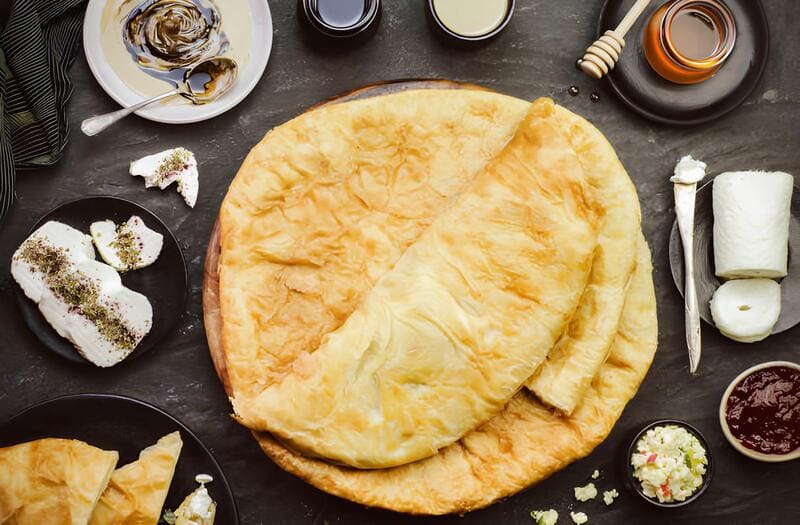
Feteer Meshaltet is a beloved dish in Egyptian cuisine, known for its unique flavor and flaky texture. This article explores how to prepare it using simple ingredients that ensure the original taste is achieved.
Feteer Meshaltet is a type of pastry typically made for special occasions and holidays, symbolizing Egyptian hospitality. It is prepared using simple ingredients such as flour, water, and ghee, making it accessible to everyone.
Preparation Details
To prepare Feteer Meshaltet, you will need basic ingredients including: 1 kilogram of flour, 500 grams of ghee, warm water, and a pinch of salt. The flour is kneaded with water and salt until a cohesive dough forms, then left to rise for an hour.
After that, the dough is divided into small balls, and each ball is rolled out into a thin circle. Ghee is spread between the layers of dough before folding, giving the pastry its flaky texture. The pastries are baked in a hot oven until they turn golden brown.
Background & Context
The origins of Feteer Meshaltet date back to ancient times when it was considered a special food served at social gatherings. Over time, it has become an integral part of Egyptian cultural heritage, symbolizing generosity and hospitality.
Pastries in Egypt are part of the culinary identity, with various preparation methods differing from one region to another. Some prefer to add fillings like cheese or honey, which adds a special touch to the traditional flavor.
Impact & Consequences
Feteer Meshaltet contributes to the enhancement of Egyptian cultural heritage, being a symbol of hospitality and inherited traditions. It also plays a role in boosting the local economy by supporting small artisans and bakeries that produce these pastries.
Moreover, pastries serve as a means of social communication, being offered at family and social events, thus strengthening bonds between individuals and promoting values of cooperation and sharing.
Regional Significance
Feteer Meshaltet exemplifies how traditional foods can shape cultural identity. The preparation methods of pastries in other Arab countries can be inspired by this dish, contributing to cultural exchange among peoples.
Additionally, Feteer Meshaltet demonstrates how traditional dishes can maintain their status in a rapidly changing world, highlighting the importance of preserving culinary heritage.
In conclusion, Feteer Meshaltet is a dish that combines authentic flavor with cultural heritage, making it an ideal choice for lovers of traditional cuisine.