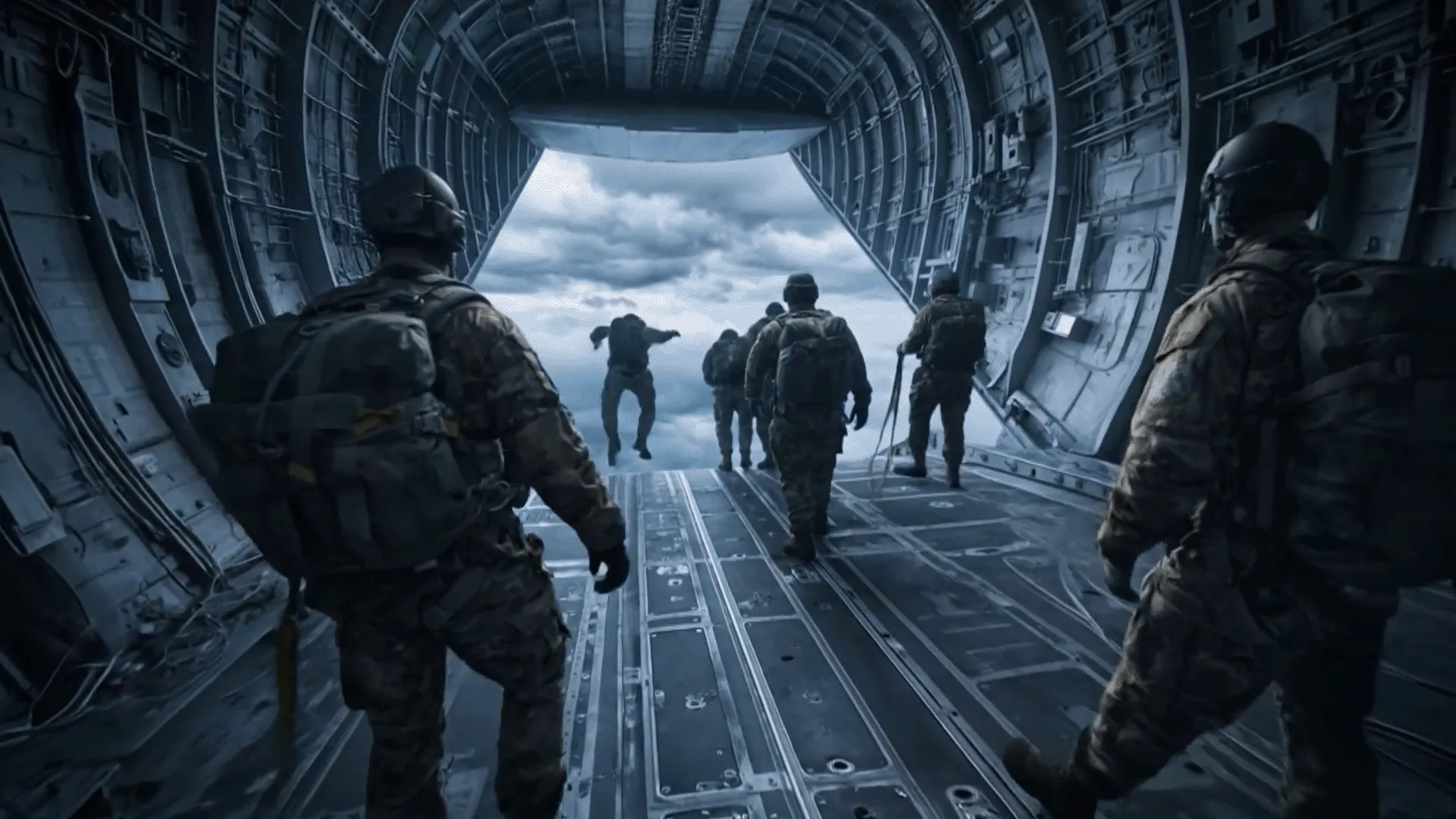
The 82nd Airborne Division, one of the most prominent rapid response units in the U.S. Army, is gearing up for deployment in the Middle East, capable of moving to any point in the world within 18 hours. This readiness comes at a time when the region is witnessing escalating military tensions, reflecting Washington's commitment to bolster its military presence.
The announcement of deploying elements of the 82nd coincides with the arrival of units from the U.S. Marine Corps aboard the USS Tripoli to the Central Command area of responsibility, indicating an increase in American military readiness in the region.
Details of the Deployment
The 82nd Airborne Division is known for its high readiness as a rapid response force, capable of conducting military operations anywhere in the world. The division is based in North Carolina and is considered the spearhead of airborne operations, tasked with securing vital sites behind enemy lines.
Comprising approximately 18,000 soldiers, all in a constant state of readiness, the division functions as a fully integrated army capable of engaging in multiple operations across diverse combat environments. The personnel are organized into three combat brigades, along with an aviation brigade that includes attack helicopters and transport helicopters, providing comprehensive air and logistical support.
Background & Context
The roots of the 82nd Division trace back to World War I, where it participated in several battles before being disbanded after the war. However, it was reconstituted with the outbreak of World War II, becoming the first airborne division in the U.S. Army and participating in the Normandy landings, which marked a turning point in the war in Europe.
Since then, the division has been involved in several major conflicts, starting from the Vietnam War, through the wars in Afghanistan and Iraq, which has provided it with extensive combat experience in dealing with various types of warfare. The 82nd Division is considered a key asset in the U.S. military strategy for rapid intervention.
Impact & Consequences
Given the current tensions in the Middle East, military experts are considering potential scenarios for the 82nd Division's involvement in military operations against Iran. Its rapid deployment capability and precision operations may allow it to target Iranian defenses at multiple locations, paving the way for broader operations by U.S. forces and their allies in the region.
However, these capabilities do not imply the absence of challenges, as experts point out that U.S. forces may encounter complex Iranian defenses, especially in sensitive geographical areas such as the islands scattered throughout the Gulf.
Regional Significance
The movements of the 82nd Airborne Division are seen as an indicator of escalating tensions in the Middle East and could significantly impact the security situation in the region. Under these circumstances, concerns about potential military escalation may rise, negatively affecting regional stability.
These developments require Arab nations to closely monitor the situation, as any military operations could impact Arab national security and complicate existing crises.
In conclusion, the U.S. 82nd Airborne Division remains one of the most prominent rapid intervention tools, making it a focal point amid rising tensions in the Middle East, raising questions about the future of stability in the region.