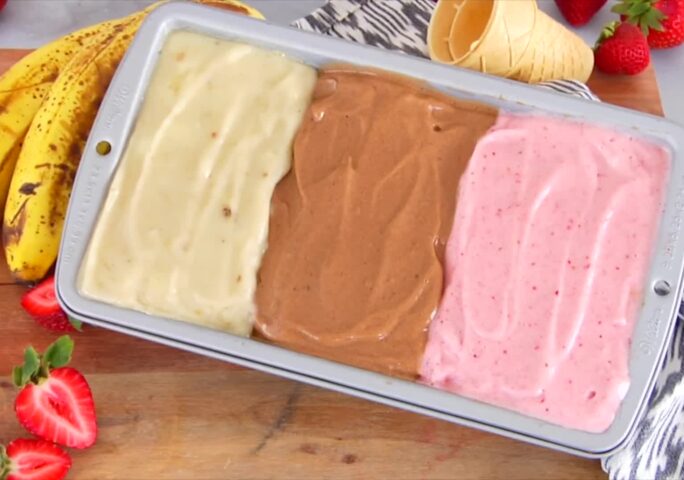
The summer season is an ideal opportunity to offer refreshing foods to children, with ice cream being a favorite choice. As concerns about preservatives and artificial ingredients grow, it has become essential to find healthy ways to prepare ice cream at home. In this context, we present an easy method to make delicious and healthy ice cream for kids without the need for preservatives.
This recipe requires simple ingredients that are available in every household, making it an ideal option for mothers who want to provide a nutritious snack for their children. Fresh fruits like bananas and strawberries can be used, along with milk or yogurt, to achieve a creamy texture and great taste.
How to Make Healthy Ice Cream
To prepare the ice cream, start by cutting the fruits into small pieces and blending them with milk or yogurt in a blender until a smooth mixture is obtained. Then, pour the mixture into ice cream molds and leave it in the freezer for at least 4 hours. You can add a little honey or sugar to taste, but honey is preferred as a healthier alternative.
You can also include additional ingredients such as dark chocolate chips or nuts to enhance the flavor. This method not only provides healthy ice cream but also gives children the chance to participate in the preparation process, increasing their enthusiasm for healthy eating.
Background & Context
In recent years, concerns have increased regarding preservatives and artificial ingredients in foods, especially those targeted at children. Studies indicate that consuming preservatives can negatively affect children's health, prompting many mothers to seek healthy alternatives. Therefore, making ice cream at home is an ideal option to meet children's nutritional needs.
This recipe is part of a broader trend towards healthy nutrition, as many people strive to reduce their consumption of processed foods. By making ice cream at home, mothers can ensure the quality of the ingredients used, thereby enhancing their children's health.
Impact & Consequences
Making ice cream at home can contribute to raising nutritional awareness among children, as they learn the importance of choosing healthy ingredients. This experience also strengthens family bonds, as the entire family can participate in the preparation process.
Moreover, this type of activity can be an effective way to teach children about fruits and vegetables, promoting healthy eating habits in the future. Involving children in the kitchen can help build their life skills and increase their self-confidence.
Regional Significance
This recipe is suitable for many families in the Arab region, where fresh fruits are readily available. This method can help promote a healthy food culture in Arab communities, aiding in addressing health challenges related to obesity and chronic diseases.
With the increasing health awareness, this recipe could be the beginning of larger initiatives aimed at improving nutrition in Arab communities, contributing to building a healthy generation capable of facing future challenges.