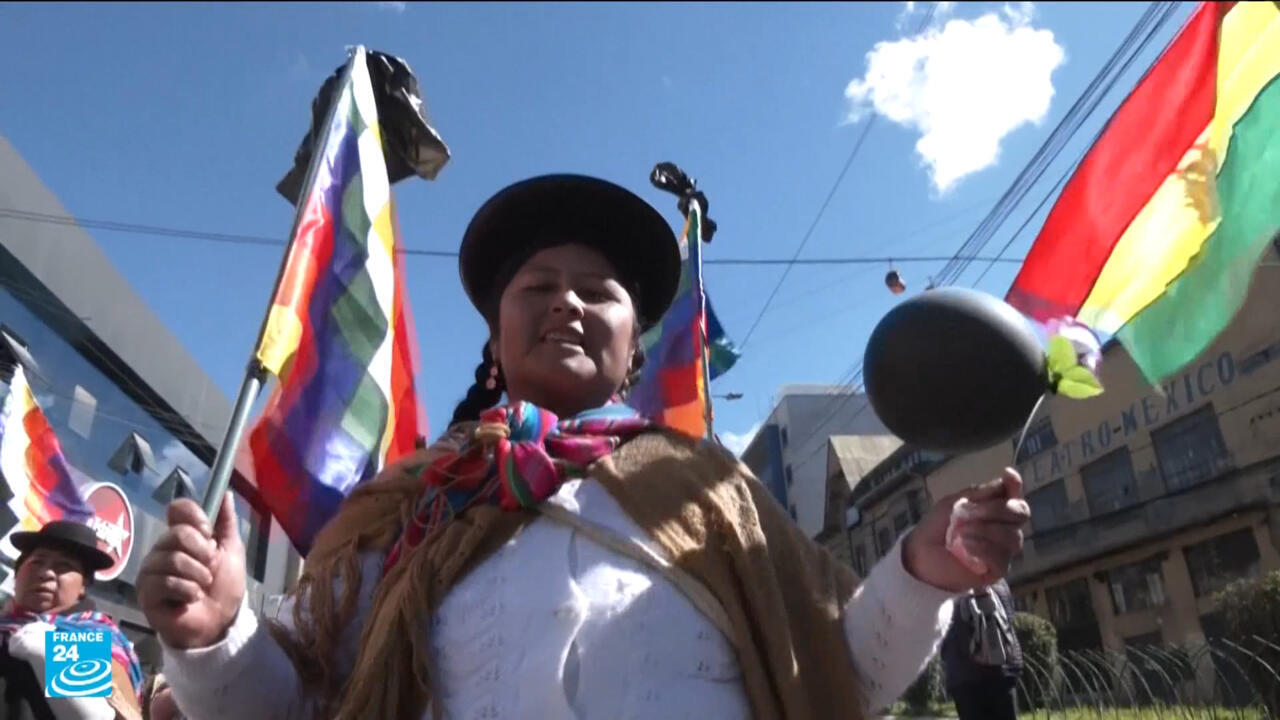
A tense calm prevails in the Bolivian capital, La Paz, after a day of violent clashes erupted between protesters and police forces. Despite the announcement by Bolivian President Rodrigo Paz to cut his salary by 50% as a measure aimed at calming protests, tensions continue to escalate.
Protests are ongoing across the country, with demonstrators blocking major roads for weeks, leading to a severe crisis in food, fuel, and medicine supplies. This situation has raised significant concern among residents, who are struggling to access basic necessities.
Details of the Protests
The protests in Bolivia have been ongoing for several weeks, with demonstrators demanding improvements in economic and social conditions. Recent days have seen an escalation in confrontations, with police using tear gas to disperse crowds. In response, protesters have set tires ablaze and blocked roads.
In an effort to ease the situation, President Rodrigo Paz announced a salary reduction, a move intended to demonstrate the government's commitment to improving citizens' living conditions. However, this measure has not been sufficient to halt the protests, as demonstrators are calling for more effective actions.
Background & Context
Historically, Bolivia has experienced numerous popular protests reflecting the social and economic tensions within the country. Since taking office, President Rodrigo Paz has faced significant challenges related to corruption and a struggling economy. Repeated economic crises have exacerbated public discontent, making the Bolivian street more inclined to protest.
These protests are part of a series of popular movements seen in Latin American countries in recent years, where citizens express their dissatisfaction with government policies that have failed to meet their aspirations.
Impact & Consequences
The current protests are affecting the daily lives of citizens, many of whom are suffering from severe shortages of essential goods. The roadblocks have worsened the transportation crisis, making it increasingly difficult to access markets and healthcare facilities.
These conditions may also impact the political stability of the country, as the government may resort to more stringent measures to confront the protests. If the situation continues on this trajectory, it could lead to a further worsening of economic and social crises.
Regional Significance
The events in Bolivia highlight the importance of political and social stability in any nation, as economic crises can lead to widespread unrest. For Arab countries, these events serve as a reminder of the importance of responding to citizens' demands and achieving sustainable development.
Moreover, the protests in Bolivia may inspire similar movements in other countries, as citizens seek to improve their living conditions. Therefore, monitoring these events could be crucial for understanding social dynamics in the region.
In conclusion, the situation in Bolivia remains under close observation as citizens strive to achieve their demands amid challenging economic conditions. With protests ongoing, the question remains about how the government will respond to these demands and how these events will affect the country's future.