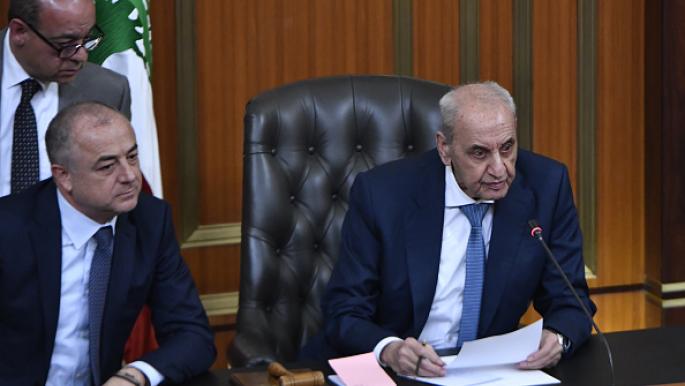
Popular protests in Lebanon have postponed a parliamentary session intended to discuss the general amnesty law, despite a compromise reached by parliamentary committees. The capital, Beirut, and several other Lebanese cities witnessed massive demonstrations where protesters voiced their opposition to the content of the proposed law, demanding significant amendments to ensure justice.
These protests come at a critical time as Lebanon seeks to address escalating economic and social crises. The general amnesty law has sparked widespread debate among various political factions, with some viewing it as a step towards reconciliation, while others see it as a threat to justice.
Details of the Event
In the parliamentary session scheduled for Tuesday, the committees had reached a compromise on the general amnesty law, which aims to resolve certain criminal cases dating back several years. However, the protests that erupted in the streets led to the postponement of discussions on this law, reflecting a state of political and social polarization in the country.
The protesters, representing various segments of Lebanese society, demanded the cancellation of certain provisions they believe may contribute to impunity. They raised slogans calling for justice and accountability, reflecting public concern over the law's impact on the rights of victims.
Background & Context
Historically, Lebanon has witnessed numerous similar laws that have sparked extensive debate, especially amid successive political and economic crises. The current general amnesty law comes at a time when Lebanon is suffering from a severe economic crisis, exacerbating the living conditions of many citizens.
This law is considered part of the Lebanese government's efforts to rebuild trust with citizens; however, doubts about the government's intentions remain. Many Lebanese feel that the laws being enacted do not reflect their true needs but are used as a tool to alleviate political pressures.
Impact & Consequences
The current protests may complicate the political landscape in Lebanon, reflecting a general dissatisfaction with the government. If discussions on the law continue to be postponed, public anger may escalate, potentially leading to further unrest on the streets of Lebanon.
The potential impacts of this situation could include increased tensions among various political forces, which may hinder any efforts to achieve stability in the country. Additionally, the continuation of protests could negatively affect the already struggling Lebanese economy, which is facing multiple crises.
Regional Significance
The events in Lebanon serve as a mirror for many political and social crises in the Arab region. The calls for justice and accountability raised by protesters in Lebanon may resonate in other countries facing similar issues.
Highlighting these issues in Lebanon could encourage other peoples in the region to demand their rights, potentially leading to more popular movements. At the same time, the response of governments to these demands may determine the future of stability in the region.
In conclusion, it remains to be seen how the situation in Lebanon will evolve and whether the government will respond to the protesters' demands. The general amnesty law represents a turning point in Lebanon's history and may have far-reaching effects on the political and social landscape of the country.