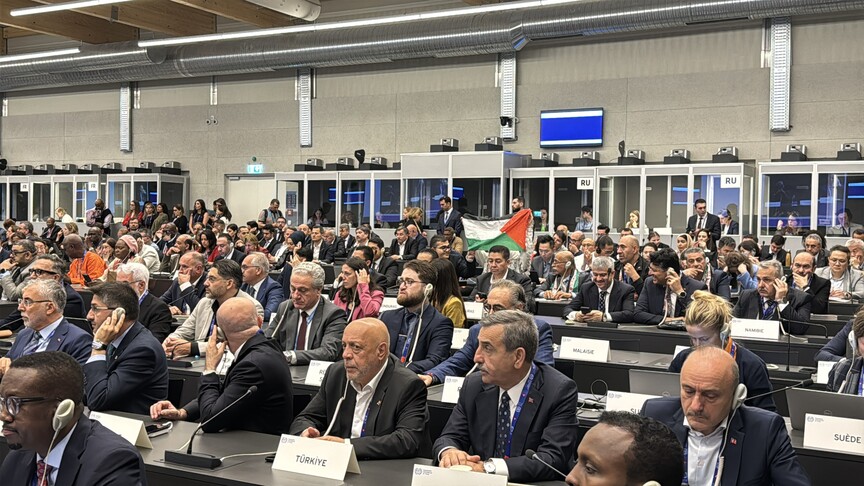
In an unprecedented event, the International Labor Conference in Geneva experienced large-scale protests that halted the speech of an Israeli official, with Turkish Labor Minister Vedat Işıkhan and the Turkish delegation joining the protesters. These protests come at a sensitive time, as tensions in the region escalate due to Israeli policies towards Palestinians.
Demonstrators gathered outside the conference hall, holding signs expressing their rejection of Israeli policies, making it difficult for the Israeli official to continue delivering his speech. This incident sparked widespread reactions among conference participants, with many considering these protests as a reflection of the growing anger towards Israeli policies.
Details of the Event
The atmosphere in the conference hall was charged, coinciding with the presence of several international delegations looking to discuss labor issues and social justice. The unnamed Israeli official attempted to deliver his speech despite the pressures but was unable to complete it due to the ongoing noise and protests.
Turkish Labor Minister Vedat Işıkhan, who participated in the protests, emphasized the importance of solidarity with humanitarian issues and workers' rights, noting that these protests reflect Turkey's steadfast position on the Palestinian issue. He also indicated that Turkey would continue to support Palestinian rights in international forums.
Background & Context
These protests occur at a critical time, as tensions in the region rise due to Israeli policies towards Palestinians. Historically, international conferences like the International Labor Conference have served as platforms for expressing social and labor issues, often witnessing protests against policies deemed unjust.
In recent years, there has been an increase in protests against Israel in various international forums, as activists seek to highlight the violations faced by Palestinians. These protests also reflect a growing global awareness of humanitarian issues and human rights.
Impact & Consequences
These protests could impact international relations, reflecting the increasing anger towards Israeli policies. Such events may lead to heightened pressure on countries to support Palestinian rights, potentially altering the dynamics of international politics.
Moreover, these protests may help strengthen solidarity among Islamic and Arab nations, as many seek to support the Palestinian cause in international forums. This solidarity could lead to the formation of new alliances in the future, influencing regional and international policies.
Regional Significance
These protests serve as a call for Arab nations to unify their efforts in supporting the Palestinian cause. Given the current circumstances, it is crucial for Arab states to adopt clear positions regarding Israeli violations and work to promote Palestinian rights in international forums.
Additionally, these events may open avenues for further cooperation between Arab countries and Turkey, potentially leading to the establishment of a united front against Israeli policies. Ultimately, the Palestinian issue remains the central focus that unites Arab nations and reflects their solidarity with the rights of the Palestinian people.