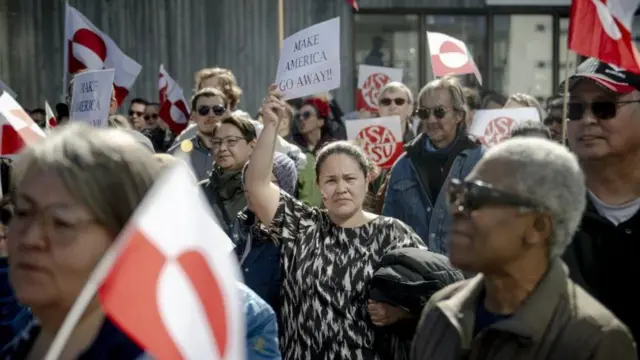
Greenland, the island located in the North Atlantic, saw a significant gathering outside the new American consulate, where demonstrators voiced their opposition to President Donald Trump's ambitions to purchase the island. These protests reflect the increasing anxiety among Greenland's residents regarding their future and cultural identity.
The demonstrations come at a sensitive time as Trump seeks to enhance American influence in the region, raising local fears of losing control over their lands. Protesters, representing various segments of society, held signs expressing their rejection of these ambitions, emphasizing the importance of preserving Greenland's sovereignty and independence.
Event Details
Protesters gathered in front of the consulate, where several activists delivered speeches articulating their concerns about the impact of American policies on the island's future. One speaker asserted that Greenland is not for sale and that local residents reject any attempts to purchase their land. Flyers were also distributed, highlighting the importance of preserving the island's cultural and historical heritage.
The protests were not limited to local residents; they also saw participation from international activists expressing solidarity with the people of Greenland. These demonstrations occur within a broader context of discussions about sovereignty and identity in the age of globalization.
Background & Context
Greenland, which enjoys self-governance, has always attracted the attention of major powers due to its strategic location and natural resources. In recent years, tensions surrounding the island have escalated, particularly following Trump's remarks about his desire to buy it. These statements have provoked strong reactions from the Danish government and local residents, who view the island as an integral part of their cultural identity.
Historically, Greenland was a Danish colony and gained self-rule in 1979. However, Denmark still retains certain authorities, complicating the political situation. In this context, Trump aims to bolster American influence in the region, raising concerns about the potential impact on Greenland's political stability.
Impact & Consequences
The protests in Greenland could escalate tensions between the United States and Denmark, as any attempt to purchase the island would be seen as a violation of its sovereignty. Additionally, these events may affect relations between the two countries, complicating the political landscape in the region.
Moreover, these protests could raise international awareness regarding issues of sovereignty and identity in Greenland. It is likely that these events will encourage other nations to support the people of Greenland in their quest to maintain their independence.
Regional Significance
Although events in Greenland may seem distant from the Arab region, issues related to sovereignty and identity remain highly significant. Many Arab countries face similar challenges in preserving their cultural identity amid international pressures.
The experiences in Greenland could serve as a lesson for Arab nations about the importance of national unity and safeguarding sovereignty, especially in light of increasing global challenges.