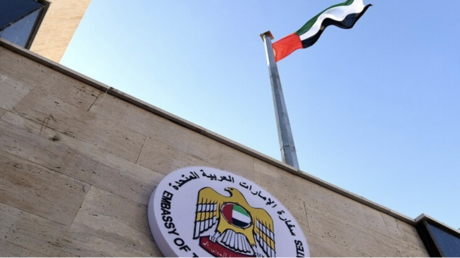
Protests have unfolded at the UAE embassy in the Syrian capital, Damascus, marking unprecedented events as citizens voiced their grievances. These protests have included some excesses, leading to widespread condemnation from both official and public spheres. The timing of these events is particularly sensitive, given the current state of relations among Arab nations, complicating the political landscape in the region.
Reactions to the protests have been swift, with numerous political and social figures condemning the actions taken by the demonstrators. They emphasized the necessity of respecting laws and international agreements that govern relations between states. Some observers have expressed concern about the implications of these events on Syrian-Emirati relations, which have seen significant improvement in recent years.
Details of the Incident
The protests outside the UAE embassy in Damascus reignited after a number of citizens expressed dissatisfaction with certain Emirati policies regarding Syria. These demonstrations included some excesses, prompting security forces to intervene to restore order. Local media have extensively covered these events, intensifying the debate surrounding them.
Simultaneously, the Syrian Ministry of Foreign Affairs issued an official statement underscoring the importance of maintaining fraternal relations between Syria and the UAE, calling for constructive dialogue to resolve any disagreements. The ministry also noted that these events do not reflect the general public opinion in Syria but rather represent a limited set of views.
Background & Context
These protests occur amid significant changes in the region, as many Arab countries seek to rebuild their relationships after years of conflict. The UAE has shown clear support for reconstruction efforts in Syria, making these events raise questions about the future of such relations.
Despite the noticeable improvement in relations between Damascus and Abu Dhabi, unresolved issues continue to affect these ties, such as the situation in Idlib and the Iranian presence in Syria. These issues may be behind the recent protests, as some feel there is a disparity in interests between the two nations.
Impact & Consequences
These events could significantly impact the bilateral relations between Syria and the UAE, potentially leading to a decline in economic and political cooperation. Furthermore, the continuation of protests may raise concerns among other countries in the region, which could affect regional stability.
On the other hand, the Syrian government may seek to quickly contain the situation to avoid any escalation, as any slide into chaos could have dire consequences for the internal situation in the country. There are also calls from some politicians for the need to enhance dialogue between the government and citizens to prevent such events in the future.
Regional Significance
These events serve as a wake-up call for other Arab nations, highlighting the importance of listening to citizens' demands and understanding their sentiments. Amid the political and social changes in the region, governments must be more open to dialogue and communication with their populations.
Moreover, these events could influence relations among Arab countries, as internal divisions may become more pronounced and tensions could escalate. It is crucial for Arab nations to cooperate to avoid any escalation that could lead to further chaos.
In conclusion, the events outside the UAE embassy in Damascus stand as a testament to the challenges facing Arab relations today, necessitating all parties to work towards enhancing dialogue and understanding.