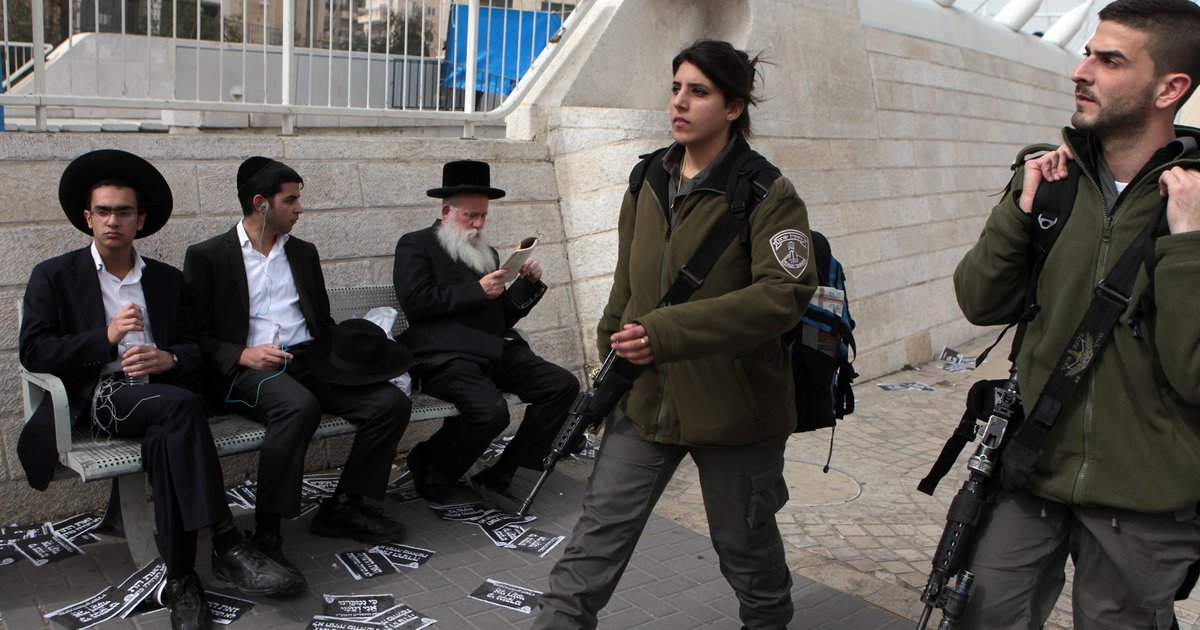
On Tuesday, Haredi protesters, known for their strict adherence to Jewish law, stormed the home of the Israeli military police chief in a significant escalation that highlights the growing tensions surrounding the issue of mandatory conscription. The protesters occupied the garden of the residence, expressing their opposition to new measures aimed at penalizing individuals who refuse to respond to military summons.
These protests come at a sensitive time as the Israeli government seeks to bolster recruitment across all segments of society, including the ultra-Orthodox communities that often reject military service. The new policies have sparked widespread debate within Israeli society, with many Haredim viewing military service as conflicting with their religious values.
Details of the Incident
On Tuesday morning, a group of protesters gathered outside the military police chief's home, breaching the garden and displaying banners that articulated their rejection of government policies. The incident was captured on video and shared on social media, eliciting mixed reactions from the public.
The newly announced measures include imposing penalties on individuals who ignore military summons, further intensifying the friction between the government and Haredi communities. Some protesters indicated that these policies represent an infringement on their religious and social rights.
Background & Context
Historically, Haredi communities in Israel have enjoyed exemptions from military service, but in recent years, the government has begun to take steps to reduce these exemptions. This shift has led to an increase in protests and demonstrations from Haredim, who feel targeted by the state.
These protests are part of a broader struggle between secular and religious values within Israeli society, as each side seeks to impose its vision on the other. Recent years have seen a rise in tensions between Haredim and Israeli authorities, impacting the social and political stability of the country.
Impact & Consequences
These protests could exacerbate the situation in Israel, as Haredi communities may continue to express their opposition to government policies. Additionally, these events could affect relations between the government and religious communities, increasing social division.
Moreover, these protests may lead to calls for more dialogue between the government and Haredi communities, as both sides seek to find compromise solutions. However, the current escalation may hinder any progress in this direction.
Regional Significance
These events are particularly significant for the Arab region, as they reflect internal tensions in Israel that could impact relations with Arab countries. The escalation of protests may also lead to increased tensions between Israelis and Palestinians, especially given the current situation in the West Bank and Gaza Strip.
Ultimately, these events stand as a testament to the challenges Israel faces in managing diversity within its society and how these challenges can affect the stability of the region as a whole.