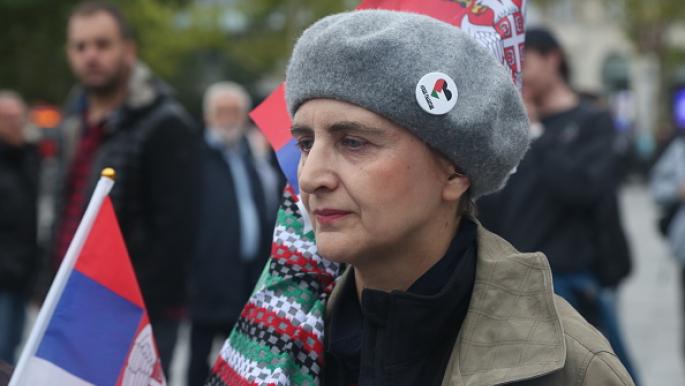
Dozens of protesters gathered in the Serbian capital, Belgrade, where they expressed their firm rejection of Israel's participation in the Eurovision Song Contest. The demonstrators, who raised slogans calling for a boycott of the event, urged the Serbian government to take a clear stance by withdrawing from this competition.
These protests come at a sensitive time, as anti-Israel sentiments have increased in many European countries, especially following recent events in Palestinian territories. The protesters pointed out that Israel's participation in such cultural events contradicts the rights of Palestinians and the historical context of the conflict in the region.
Details of the Event
The protesters gathered in Republic Square, chanting slogans calling for solidarity with the Palestinian people. These protests were organized by a group of NGOs and activists who aim to highlight humanitarian issues in Palestine. Reports indicated that the protests were peaceful, with no incidents of violence or clashes with security forces.
Although Eurovision is considered a musical event aimed at promoting cultural exchange, many participants believe that politics plays a significant role in determining the participants. The protesters noted that Israel's presence in the contest represents a disregard for the suffering of Palestinians.
Background & Context
The Eurovision Song Contest was established in 1956 and is regarded as one of the oldest and most famous song competitions in the world. Over the years, the contest has become a platform for discussing social and political issues, with artists using their platforms to express their views on global matters.
In recent years, similar protests have occurred in other countries, targeting Israel due to its policies towards Palestinians. These protests have sparked widespread debate about the role of art and culture in addressing political issues.
Impact & Consequences
These protests in Belgrade are part of a broader movement gaining momentum in Europe, where many activists seek to use the arts as a means of expressing their political stances. These protests may affect Serbia's image in the international community, especially if it continues to reinforce its anti-Israel position.
Moreover, these events could encourage other countries to adopt similar stances, potentially leading to changes in how major cultural events are organized in the future. Diplomatic relations between Serbia and Israel may also be impacted as a result of these protests.
Regional Significance
These protests signal a growing Arab awareness of Palestinian issues, as many Arabs are closely following the events in Belgrade. These protests may inspire Arab youth to engage in similar movements that express their support for Palestine.
Furthermore, these events could enhance Arab solidarity with Palestinians, contributing to international efforts to pressure Israel to end its occupation of Palestinian territories.
As protests against Israel escalate worldwide, the Eurovision Song Contest remains a focal point for many, reflecting the political and social tensions that influence art and culture.