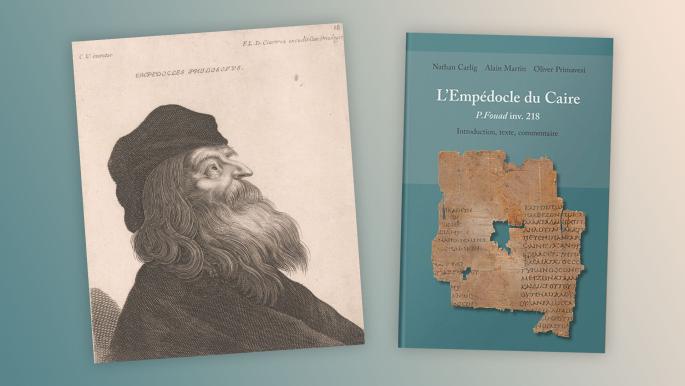
The University of Liège has announced the release of a new book featuring 30 unpublished verses by the Greek philosopher Empedocles, based on a papyrus discovered in 2017. These discoveries represent an important addition to ancient philosophical literature, reflecting Empedocles' thoughts on nature and existence.
Empedocles, who lived in the 5th century BC, is considered one of the most prominent philosophers in Greek history. He had a significant impact on philosophy and science, proposing theories about the four elements: earth, air, fire, and water. He also believed in the idea of reincarnation, making him a controversial figure in his time.
Details of the Discovery
The papyrus discovered in 2017 contains poetic texts attributed to Empedocles, which have been carefully analyzed by a group of researchers at the University of Liège. These texts reveal new aspects of his philosophy and provide insights into how he understood the world around him.
This papyrus is considered one of the most important archaeological discoveries in recent years, contributing to reshaping our understanding of Empedocles' philosophy. The book has been published in collaboration with a group of academics specializing in ancient Greek philosophy.
Background & Context
Historically, Empedocles had a significant influence on later philosophers such as Plato and Aristotle. His ideas contributed to the formation of many philosophical and scientific theories that are still studied today. However, much of his work was lost or incomplete, making new discoveries like this papyrus particularly valuable.
Many sources discuss Empedocles' impact on philosophical thought, as he believed that the universe consists of multiple elements interacting with each other. These ideas were ahead of their time and influenced many fields, including the natural sciences.
Impact & Consequences
The publication of these new texts may open new avenues for academic research in ancient Greek philosophy. It could also encourage further studies on Empedocles' influence on later philosophers. These discoveries are expected to generate significant interest in academic circles, potentially leading to a reevaluation of some traditional philosophical concepts.
Additionally, these texts could enhance the general understanding of ancient Greek philosophy, making it more accessible to a broader audience. This may lead to increased interest in philosophy as a field of study, especially among young people.
Regional Significance
Greek philosophy is considered part of the cultural heritage that has influenced Arab and Islamic thought. Many Arab philosophers, such as Al-Farabi and Ibn Rushd, were influenced by the ideas of Greek philosophers, including Empedocles. Thus, the rediscovery of his texts could contribute to enhancing cultural dialogue between civilizations.
Moreover, these discoveries pave the way for further studies on philosophy in the Arab world, which could contribute to fostering mutual understanding between different cultures.