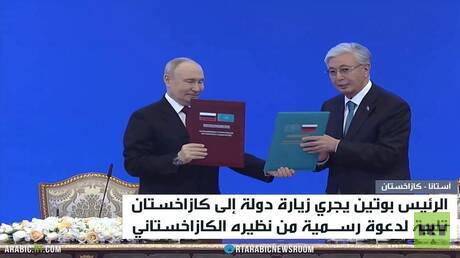
During his official visit to Astana, Russian President Vladimir Putin announced the signing of several strategic agreements with Kazakhstan, marking a significant step towards enhancing bilateral cooperation between the two countries. Among these agreements is the plan to establish the first nuclear power plant in Kazakhstan, a pioneering project in the country's history.
This initiative comes at a time when Kazakhstan is seeking to diversify its energy sources, especially in light of global challenges related to energy and the environment. The new nuclear plant is expected to help meet the country's increasing energy demands and strengthen Kazakhstan's energy independence.
Details of the Agreements
During the visit, several memorandums of understanding were signed covering various fields such as energy, industry, and agriculture. Putin emphasized that these agreements would contribute to enhancing economic relations between Russia and Kazakhstan, highlighting the importance of cooperation in modern technology and innovation.
The leaders also addressed the issue of regional security, affirming the need to enhance collaboration in security and defense areas amid the growing challenges facing the region. This cooperation includes the exchange of information and expertise in combating terrorism and organized crime.
Background & Context
Historically, Russia and Kazakhstan have enjoyed strong relations, with Kazakhstan being one of Russia's key trading partners in Central Asia. Since Kazakhstan's independence in 1991, the two countries have worked to strengthen bilateral cooperation across various sectors, including energy, transportation, and trade.
Kazakhstan is rich in natural resources, possessing significant reserves of oil and gas, making it an attractive destination for Russian investments. In recent years, relations between the two countries have notably developed, especially following Kazakhstan's accession to the Eurasian Economic Union.
Impact & Consequences
The establishment of the nuclear power plant in Kazakhstan could open new avenues for cooperation between Russia and other countries in the field of nuclear energy. This project has the potential to enhance Kazakhstan's position as a regional energy hub and attract more foreign investments.
Moreover, this collaboration may improve Kazakhstan's economic situation by creating new job opportunities and fostering the development of local technology. Additionally, this initiative could contribute to achieving Kazakhstan's sustainable development goals.
Regional Significance
The relations between Russia and Kazakhstan serve as a model for strategic cooperation in Central Asia and could have positive effects on Arab countries. In light of global economic challenges, Arab nations might benefit from Kazakhstan's experiences in diversifying energy sources and enhancing regional cooperation.
Furthermore, strengthening cooperation between Russia and Kazakhstan could contribute to regional stability, positively impacting regional security and enhancing opportunities for Arab-Russian collaboration across various fields.
In conclusion, the agreements signed between Russia and Kazakhstan represent a strategic step towards bolstering bilateral relations and open new horizons for cooperation in vital areas, reflecting the importance of these relations in the regional and international context.